

Product Introduction
Siraitia grosvenorii, commonly known as monk fruit or Luo Han Guo, is a fruit native to southern China and northern Thailand. It has been used for centuries in traditional Chinese medicine (TCM) and is now gaining popularity worldwide as a natural, zero-calorie sweetener. The fruit is known for its intense sweetness, which comes from a group of compounds called mogrosides. Due to its unique properties and health benefits, siraitia grosvenorii is used in various applications, from sweetening foods and beverages to supporting overall well-being.
Main Active Ingredients
The primary active components in siraitia grosvenorii are mogrosides, especially mogroside V. Mogrosides are cucurbitane-type triterpene glycosides, which give the fruit its characteristic sweetness. Mogroside V is reported to be about 100-250 times sweeter than sucrose. These compounds also possess antioxidant and anti-inflammatory properties, contributing to the fruit's health benefits. Mogrosides are metabolized differently than natural sugars, thus having negligible calories and minimal impact on blood sugar levels.
Product Application Scenarios, Usage, and Dosage
Siraitia grosvenorii is widely used as a natural sweetener in foods and beverages. It can be found in teas, juices, smoothies, desserts, and baked goods, and can also be used as a sugar alternative for individuals managing diabetes or those seeking to reduce their calorie intake.
In traditional Chinese medicine, monk fruit is used to relieve coughs, soothe sore throats, and support lung health. It is often consumed as a tea or added to herbal formulas.
The appropriate dosage varies depending on the specific product and intended use. As a sweetener, it is often used in small amounts due to its high intensity. For therapeutic purposes, it is best to follow the guidance of a healthcare professional or a qualified herbalist.
Introduction to the Source Plant, Distribution, and Growth Environment
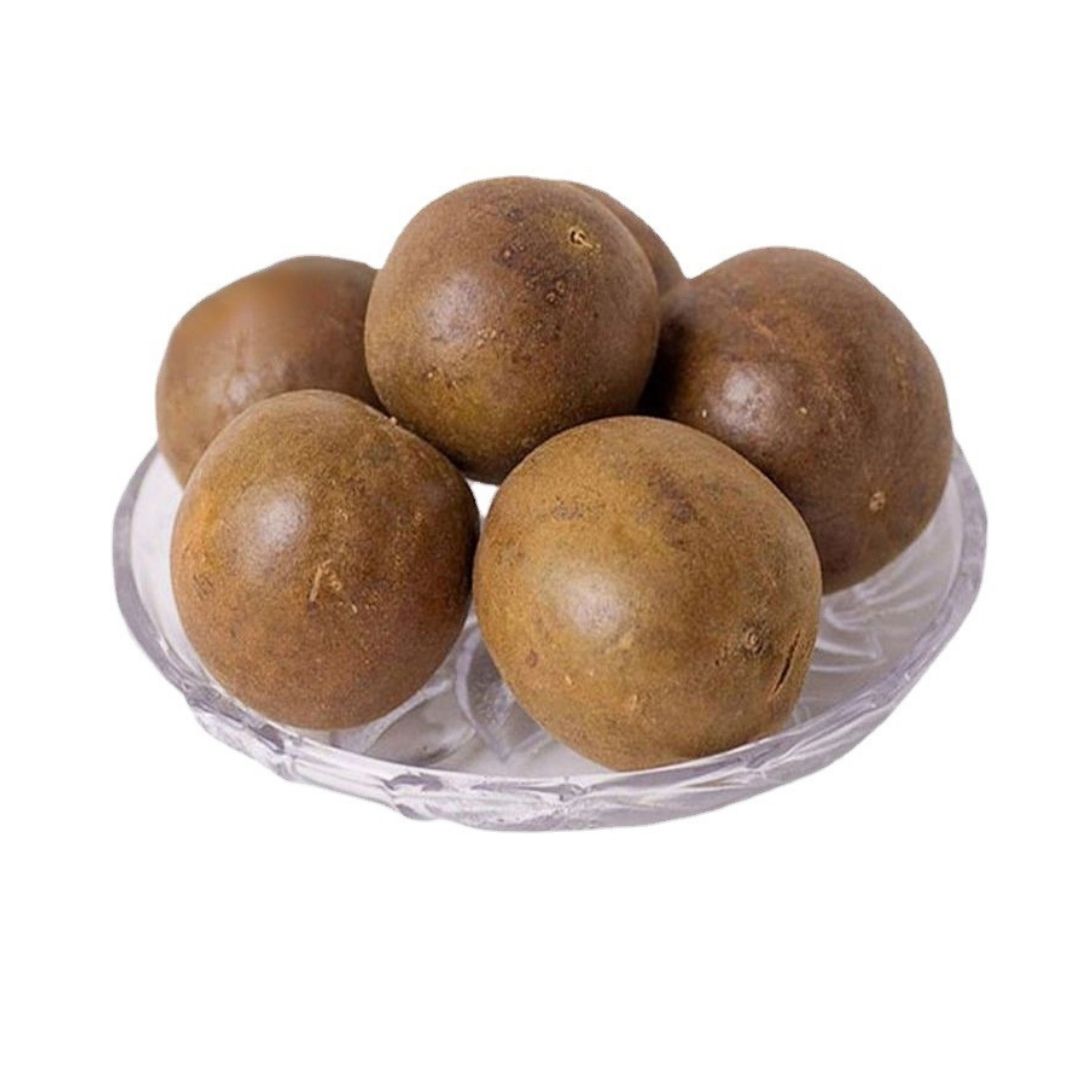
Siraitia grosvenorii is a perennial vine belonging to the Cucurbitaceae family. It is primarily found in the mountainous regions of Guangxi, China, and northern Thailand. The plant thrives in humid, subtropical climates with well-drained soils. It typically grows on trellises or other supporting structures, reaching lengths of up to 3-5 meters. The fruit is round or oval, green when unripe and turning brown when dried. The plant requires specific environmental conditions to flourish, which contributes to its limited geographical distribution.
Harvesting, Processing, and Storage
The fruits of Siraitia grosvenorii are typically harvested in the autumn, when they have fully ripened. After harvesting, the fruits are dried, traditionally in ovens, which preserves them and intensifies their sweetness. Modern processing methods may also include freeze-drying or spray-drying to produce monk fruit extracts or powders.
For storage, dried monk fruit and its extracts should be kept in a cool, dry place, away from direct sunlight and moisture. Properly stored, they can maintain their quality and potency for an extended period. Packaging should be airtight to prevent degradation and maintain freshness.
Citations
- Luo, S., et al. "Luo Han Guo: A Review of Chemical Constituents, Biological Activities, and Manufacture Processes." Chinese Medicine, vol. 11, no. 1, 2016, p. 70.
- Agarwal, S. "Zero-Calorie Natural Sweeteners: An Overview." International Journal of Food Sciences and Nutrition, vol. 63, no.sup1, 2012, pp. 129-134.
- Xiao, H., et al. "The effect of Siraitia grosvenorii Swingle fruit extract on mucociliary clearance in a murine model." Journal of Ethnopharmacology, vol. 121, no. 2, 2009, pp. 279-282.
Mia Wu

Hi, I’m Mia Wu! I love helping customers discover the best natural ingredients for their products. With a passion for herbs, spices, and fungi, I work to make sure you get only the finest raw materials. Let's grow together! 🌱✨