

Product Introduction
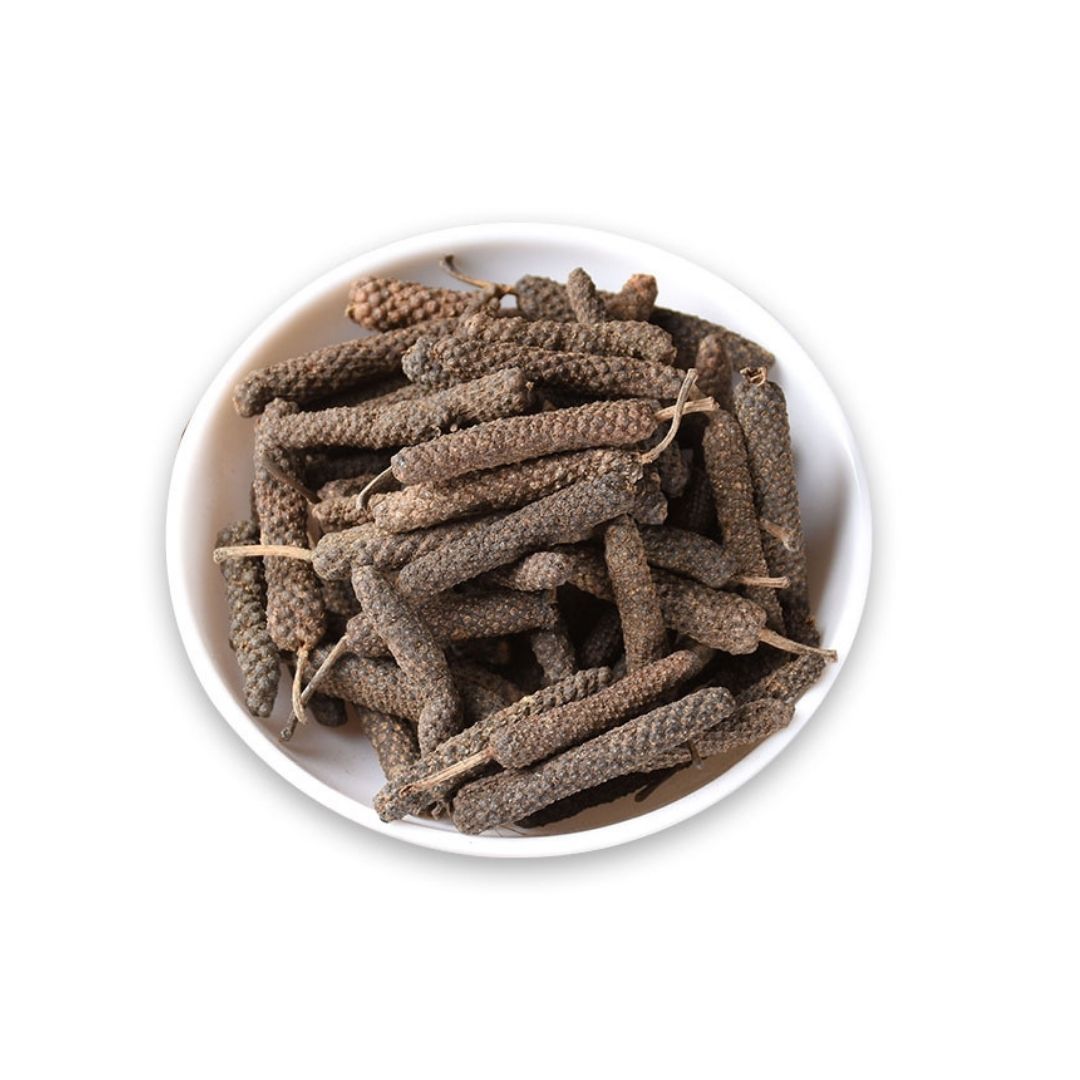
Piper longum, also known as Indian long pepper, is the dried fruit of the Piper longum plant, a member of the Piperaceae family. The plant is native to South Asia, Southeast Asia, and the Pacific Islands. It is widely used as a spice and in traditional medicine. The fruit is harvested before it ripens and then sun-dried, resulting in a small, cylindrical, cone-like structure, typically 2-5 centimeters long.
The flavor profile of Piper longum is characterized by its pungent, sweet, and slightly bitter taste. It is more aromatic than black pepper, offering a complex blend of heat and sweetness. The main active compound responsible for its pungency is piperine, an alkaloid found in various Piper species. Other chemical constituents contribute to its overall flavor and aroma.
In culinary applications, Piper longum is employed to add warmth and depth to dishes. It can be used whole or ground and is often featured in spice blends, sauces, and stews. Beyond its culinary uses, Piper longum has a long history of use in Ayurvedic medicine. It is believed to possess various medicinal properties, including digestive, anti-inflammatory, and antioxidant effects.
The use of Piper longum dates back thousands of years, with mentions in ancient Indian and Greek texts. Today, it continues to be valued for both its flavor and potential health benefits. Proper storage in airtight containers, away from light and moisture, helps to maintain its quality and potency.
Aromatic Chemical Composition
The aromatic chemical composition of Piper longum is complex, involving a range of volatile and non-volatile compounds. The key components include:
- Piperine: The most abundant alkaloid, contributing significantly to the pungency and spiciness. [^1]
- Volatile Oils: These include monoterpenes and sesquiterpenes, which provide the characteristic aroma. Examples are caryophyllene, limonene, and pinene. [^2]
- Alkaloids: In addition to piperine, other alkaloids such as piperidine and piperettine are present, further influencing the flavor profile.
- Resins: These add to the overall complexity and texture of the spice.
What Types of Products Are Available?
Piper longum is available in several forms to suit different applications:
- Whole Dried Fruit: This is the most common form, where the entire fruit spike is dried and sold. It can be ground as needed to ensure freshness.
- Ground Piper Longum: A convenient option for immediate use in cooking. It should be stored properly to prevent loss of flavor and aroma.
- Extracts and Oils: Concentrated forms used in the food and pharmaceutical industries for flavoring or medicinal purposes.
- Powdered Form: Used in traditional medicine and dietary supplements.
Application Scenarios and Usage Dosage
In the culinary field, Piper longum is versatile and can enhance a variety of dishes. Its flavor is often described as a combination of black pepper's heat, ginger's warmth, and a hint of sweetness, making it suitable for both savory and sweet preparations.
Dosage is an important consideration when using Piper longum. Due to its potent flavor, it is generally used in smaller quantities compared to black pepper. A typical starting point is to use about half the amount of Piper longum as you would black pepper and adjust based on taste preferences.
Here are some specific application scenarios and suggested dosages:
- Spice Blends: Piper longum is a key ingredient in many traditional spice blends, such as Indian garam masala. It contributes warmth and complexity. When incorporating it into a blend, start with a small quantity, such as 5-10% of the total spice mixture, and adjust to taste. [^3]
- Curries and Stews: The spice can be added whole or ground to curries and stews. If using whole, add it early in the cooking process to allow the flavors to infuse. If using ground, add it towards the end to preserve its pungency. A typical dosage for a pot of curry serving four people is approximately 1/2 to 1 teaspoon of ground Piper longum.
- Pickling and Preserves: Piper longum's antimicrobial properties make it suitable for pickling and preserving foods. Add a few whole fruits to the pickling brine or sprinkle ground spice. For a quart of pickles, 2-3 whole fruits or 1/4 teaspoon of ground spice is generally sufficient.
- Sauces and Marinades: It can be incorporated into sauces and marinades to add depth and heat. In marinades, it pairs well with other spices like ginger, garlic, and chili. Use about 1/4 to 1/2 teaspoon of ground Piper longum per cup of marinade.
- Desserts: In some cuisines, Piper longum is used in small quantities to add a unique twist to desserts, such as spiced cakes and cookies. The sweetness balances the spice's heat and can create an interesting flavor profile. A pinch (1/8 teaspoon) of ground spice per batch of cookies or cake batter is usually enough.
- Infused Oils and Vinegars: Piper longum can be used to infuse oils and vinegars, providing a subtle yet distinct flavor. Add a few whole fruits to a bottle of oil or vinegar and let it infuse for a few weeks. Use the infused oil or vinegar in dressings, sauces, and marinades.
- Beverages: In some traditional drinks, Piper longum is added for its warming properties. A small piece of the fruit can be added to teas or herbal infusions.
The key to using Piper longum effectively is to start with a small amount and adjust it to suit your taste preferences. Its unique flavor profile can enhance various dishes, but it is important to balance it with other ingredients to avoid overpowering the dish.
Introduction to the Source Plant, Distribution, and Growing Environment
Piper longum is a slender, dioecious, perennial climber that belongs to the Piperaceae family. The plant typically grows to a height of up to 1 meter. It features branching stems, heart-shaped leaves, and small, elongated fruits that are harvested and dried for use as a spice. [^4]
The plant is native to the tropical regions of South Asia, Southeast Asia, and the Pacific Islands. It is widely cultivated in India, Indonesia, Nepal, and other countries with similar climates.
Piper longum thrives in warm, humid climates with well-drained soil. The ideal growing environment includes partial shade and protection from extreme temperatures. It is often grown in home gardens or small-scale farms. Propagation is typically done through stem cuttings.
Harvesting, Processing, and Storage Preservation
Harvesting of Piper longum fruits usually occurs before they are fully ripe, typically 4-6 months after planting. The fruits are hand-picked when they are still green but have begun to turn red. This timing ensures the optimal flavor and pungency. [^5]
After harvesting, the fruits are spread out in the sun to dry. This process usually takes several days. The drying process reduces moisture content and helps to preserve the fruit. Once dried, the fruits turn dark brown to black and become hard and brittle.
To maintain the quality and potency of Piper longum, proper storage is essential. The dried fruits should be stored in airtight containers in a cool, dark, and dry place. This helps to prevent moisture absorption, which can lead to mold growth and loss of flavor. Ground Piper longum is more susceptible to spoilage and should be stored in airtight containers and used within a few months.
[^1]: Bhagat, S., Bajaj, A., Tekade, M., & Chopde, B. A. (2020). Piper longum: An updated review of its phytochemistry, pharmacology, and clinical applications. Journal of Ethnopharmacology, 263, 113271.
[^2]: Parida, R., & Sharma, D. (2019). A review on phytochemistry and pharmacological activities of Piper longum Linn. Journal of Pharmacognosy and Phytochemistry, 8(3), 1842-1849.
[^3]: Kapoor, K. (2017). Spice blends: The complete guide to creating your own spice blends. Chartwell Books.
[^4]: Peter, K. V. (2004). Handbook of herbs and spices. Woodhead Publishing.
[^5]: Khare, C. P. (2008). Indian medicinal plants: An illustrated dictionary. Springer Science & Business Media.
Mia Wu

Hi, I’m Mia Wu! I love helping customers discover the best natural ingredients for their products. With a passion for herbs, spices, and fungi, I work to make sure you get only the finest raw materials. Let's grow together! 🌱✨