

Product Introduction
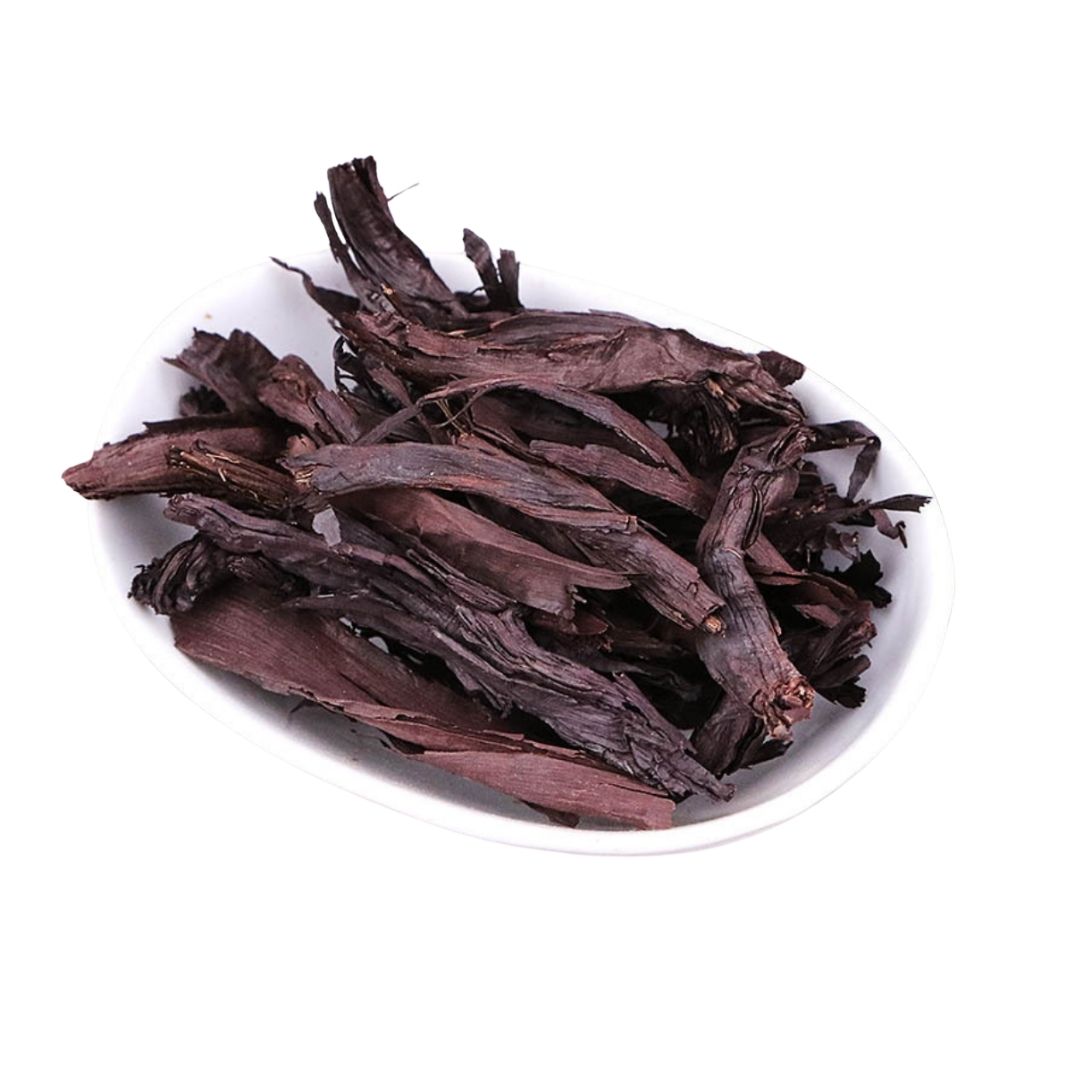
Lithospermum, scientifically known as Lithospermum erythrorhizon, is a plant species renowned for its roots, which are a source of valuable compounds. Originating from East Asia, particularly China, Korea, and Japan, this plant has a long history of use in traditional medicine and as a natural dye. The dried root of the plant is characterized by its distinctive purplish-red color, attributed to the presence of naphthoquinones.
The primary bioactive compounds found in Lithospermum are naphthoquinones, mainly shikonin and its derivatives such as acetylshikonin. These compounds are responsible for many of the plant's purported medicinal properties. Additionally, the root contains volatile oils and polysaccharides, which contribute to its overall chemical profile.
In traditional medicine, Lithospermum has been used to treat a variety of ailments, including skin disorders, burns, and inflammation. Its anti-inflammatory and wound-healing properties make it a popular ingredient in topical preparations. Furthermore, the root has been employed as a natural dye for textiles and cosmetics, imparting a vibrant red hue.
Due to its bioactive components, Lithospermum is also utilized in the cosmetic industry. It is incorporated into skincare products for its potential antioxidant and skin-soothing effects. The plant's diverse range of applications highlights its significance in both traditional and modern contexts. Proper storage in cool, dry conditions is essential to maintain the quality and potency of Lithospermum.
Aromatic Chemical Composition
The aromatic chemical composition of Lithospermum erythrorhizon is predominantly characterized by volatile compounds and naphthoquinones. Shikonin derivatives, such as acetylshikonin, are significant contributors, though not strictly aromatic in the conventional sense of fragrance, they influence the overall chemical profile.
Volatile oils present in lithospermum contribute subtle aromatic notes, though they are not as pronounced as in other spices. The specific volatile compounds can vary depending on the plant's origin, growing conditions, and processing methods. These compounds, even in small quantities, play a role in the overall sensory experience.
While shikonin and its derivatives are primarily recognized for their medicinal and coloring properties, their presence indirectly affects the aromatic profile by influencing the overall chemical interactions within the plant extract. Further research into the specific volatile components of different Lithospermum erythrorhizon varieties could reveal additional nuances in its aromatic chemical composition.
What Types of Products Are Available?
Lithospermum is available in several forms, each catering to different applications:
- Dried Root: This is the most basic form, consisting of the dried and often sliced root of the Lithospermum erythrorhizon plant. It is used for making infusions, decoctions, or extracts.
- Powdered Root: The dried root is ground into a fine powder, which can be easily incorporated into formulations such as creams, lotions, and cosmetics.
- Extracts: Lithospermum extracts are available in various forms, including tinctures, liquid extracts, and concentrated extracts. These extracts contain a higher concentration of the active compounds, such as shikonin.
- Oils and Creams: Infused oils and creams containing lithospermum extract are popular for topical applications. These products are used for their skin-soothing and anti-inflammatory properties.
- Capsules and Supplements: Lithospermum is also available in capsule form, often marketed as a dietary supplement.
- Dyes: In some regions, lithospermum is processed into a natural dye for textiles and other materials. The dye is typically extracted using solvents or traditional methods.
Application Scenarios and Usage Dosage
In culinary applications, lithospermum is not typically used as a primary spice due to its medicinal and coloring properties. However, its extracts and derivatives can be incorporated in small quantities for specific purposes.
Culinary Applications:
- Natural Food Coloring: Lithospermum extract can be used as a natural food coloring agent. The red pigment, shikonin, can impart a vibrant hue to dishes. The dosage should be very minimal, starting with a few drops of a diluted extract to avoid overpowering the flavor or color. For example, in traditional East Asian desserts, a tiny amount might be added to rice cakes or sweets to give them a reddish tint.
- Herbal Infusions: While not common, a very mild infusion of lithospermum root can be used as a tea. The dosage should be carefully controlled, using only a small piece of the dried root (less than 1 gram) per cup of hot water. The infusion should be steeped for a short period (5-10 minutes) to avoid extracting excessive amounts of shikonin. This is more for its potential health benefits than for flavor enhancement.
- Fermented Foods: In traditional fermentation processes, small amounts of lithospermum have been used for its antimicrobial properties and to influence the color of the final product. For instance, it can be added to certain types of pickles or fermented sauces in trace amounts. The dosage would be in the range of 0.1% to 0.5% of the total ingredients.
Usage Methods and Dosage:
- Extracts: When using lithospermum extracts, it is crucial to dilute them properly. A typical starting point is a 1:10 dilution with water or another suitable solvent. The diluted extract can then be added to food products in very small quantities, such as 0.01% to 0.1% of the total weight.
- Powdered Root: If using the powdered root directly, the dosage should be extremely low, usually less than 0.05% of the total ingredients. The powder can be mixed with other spices or herbs to mask its flavor.
- Oils: Lithospermum-infused oils can be drizzled over dishes as a finishing touch. The oil should be prepared by infusing a small amount of dried root in a carrier oil, such as sesame oil or olive oil. The dosage should be limited to a few drops per serving.
Cautions:
- Due to the potent nature of shikonin and other compounds, lithospermum should be used with caution in culinary applications. Excessive consumption can lead to adverse effects.
- Pregnant and breastfeeding women should avoid using lithospermum in any form.
- Individuals with sensitive skin or known allergies to plants in the Boraginaceae family should exercise caution.
By carefully controlling the dosage and using lithospermum sparingly, it can be incorporated into culinary creations for its unique color and potential health benefits.
Introduction to the Source Plant, Distribution, and Growing Environment
Lithospermum erythrorhizon is a perennial herb belonging to the Boraginaceae family, commonly known as the gromwell family. This plant is characterized by its vibrant red roots, which are the source of the commercially valuable shikonin compounds.
Distribution:
Lithospermum erythrorhizon is native to East Asia, including China, Japan, Korea, and parts of Russia. It is primarily found in regions with temperate climates and specific soil conditions.
Growing Environment:
- Climate: The plant thrives in temperate climates with distinct seasons, requiring a period of dormancy during the winter months.
- Soil: Lithospermum erythrorhizon prefers well-drained soils that are slightly acidic to neutral in pH. The soil should be rich in organic matter to support healthy root development.
- Sunlight: The plant requires partial to full sunlight for optimal growth. It can tolerate some shade, but excessive shading may reduce the production of shikonin in the roots.
- Water: Consistent moisture is essential, especially during the growing season. However, the plant is susceptible to root rot in waterlogged conditions, so proper drainage is crucial.
- Altitude: Lithospermum erythrorhizon is typically found at elevations ranging from 100 to 1500 meters above sea level.
Cultivation Practices:
- Propagation: The plant can be propagated from seeds or root cuttings. Seeds require stratification before sowing to improve germination rates. Root cuttings are typically taken in the fall and planted directly into the soil.
- Planting: Seedlings or root cuttings are planted in well-prepared soil with adequate spacing to allow for root development.
- Maintenance: Regular weeding is necessary to prevent competition for nutrients and sunlight. Fertilization with organic fertilizers can improve plant growth and shikonin production.
- Pest and Disease Control: Lithospermum erythrorhizon is susceptible to certain pests and diseases, including fungal infections and root nematodes. Proper sanitation and the use of organic pest control methods are recommended.
Harvesting, Processing, and Storage Preservation
Harvesting:
The roots of Lithospermum erythrorhizon are typically harvested in the fall, after the plant has completed its growing cycle and the leaves have begun to senesce. This is when the concentration of shikonin in the roots is at its highest.
- Timing: Harvesting is best done in the late autumn or early winter, usually two to three years after planting, to allow the roots to mature and accumulate sufficient levels of bioactive compounds.
- Method:
- The entire plant is carefully dug up to avoid damaging the roots.
- The roots are then separated from the stems and leaves.
- Excess soil is gently removed from the roots, and they are washed with clean water.
Processing:
After harvesting, the roots undergo several processing steps to prepare them for storage and use.
- Cleaning: The harvested roots are thoroughly cleaned to remove any remaining soil, debris, or contaminants.
- Drying: The cleaned roots are dried to reduce their moisture content, which helps prevent spoilage and preserves the active compounds.
- Sun Drying: Traditional methods involve spreading the roots in a thin layer in a sunny location and allowing them to air dry. This process can take several days to weeks, depending on the weather conditions.
- Artificial Drying: Modern methods use controlled-environment dryers to speed up the drying process and ensure consistent quality. The roots are typically dried at a temperature of 35-40°C (95-104°F) until they reach a moisture content of less than 12%.
- Slicing (Optional): The dried roots may be sliced into smaller pieces to facilitate extraction or grinding.
- Powdering (Optional): Some roots are ground into a fine powder using a mechanical grinder. The powder is then sieved to ensure uniform particle size.
Storage Preservation:
Proper storage is essential to maintain the quality and potency of the processed lithospermum roots.
- Conditions:
- Cool: The roots should be stored in a cool environment, ideally below 25°C (77°F), to prevent degradation of the active compounds.
- Dry: The storage area should be dry, with a relative humidity of less than 60%, to prevent mold growth and spoilage.
- Dark: The roots should be protected from direct sunlight, as exposure to light can cause the degradation of shikonin and other light-sensitive compounds.
- Well-Ventilated: Good air circulation helps prevent the buildup of moisture and odors.
- Packaging:
- The dried roots or powder should be stored in airtight containers to protect them from moisture and air.
- Suitable packaging materials include glass jars, plastic containers, and sealed bags made of moisture-proof materials.
- Shelf Life:
- Under optimal storage conditions, dried lithospermum roots can maintain their quality for up to three years.
- Powdered lithospermum may have a shorter shelf life, typically one to two years, due to the increased surface area exposed to air and moisture.
Citations:
- Asada, Y., & Yoshikawa, T. (2002). Preventive effect of shikonin on skin injury induced by UV irradiation. Yakugaku Zasshi, 122(9), 677-682.
- Chen, Y., et al. (2014). Chemical constituents from Lithospermum erythrorhizon and their inhibitory effects on LPS-induced NO production. Fitoterapia, 95, 282-288.
- Lee, J. H., et al. (2009). Anti-inflammatory effect of shikonin on carrageenan-induced inflammation in rats. Archives of Pharmacal Research, 32(3), 449-456.
- ড়েডিমার্চ, কে. (২০১১). "Lithospermum erythrorhizon". উদ্ভিদে নামের উদ্ভব.
Mia Wu

Hi, I’m Mia Wu! I love helping customers discover the best natural ingredients for their products. With a passion for herbs, spices, and fungi, I work to make sure you get only the finest raw materials. Let's grow together! 🌱✨