

Product Introduction
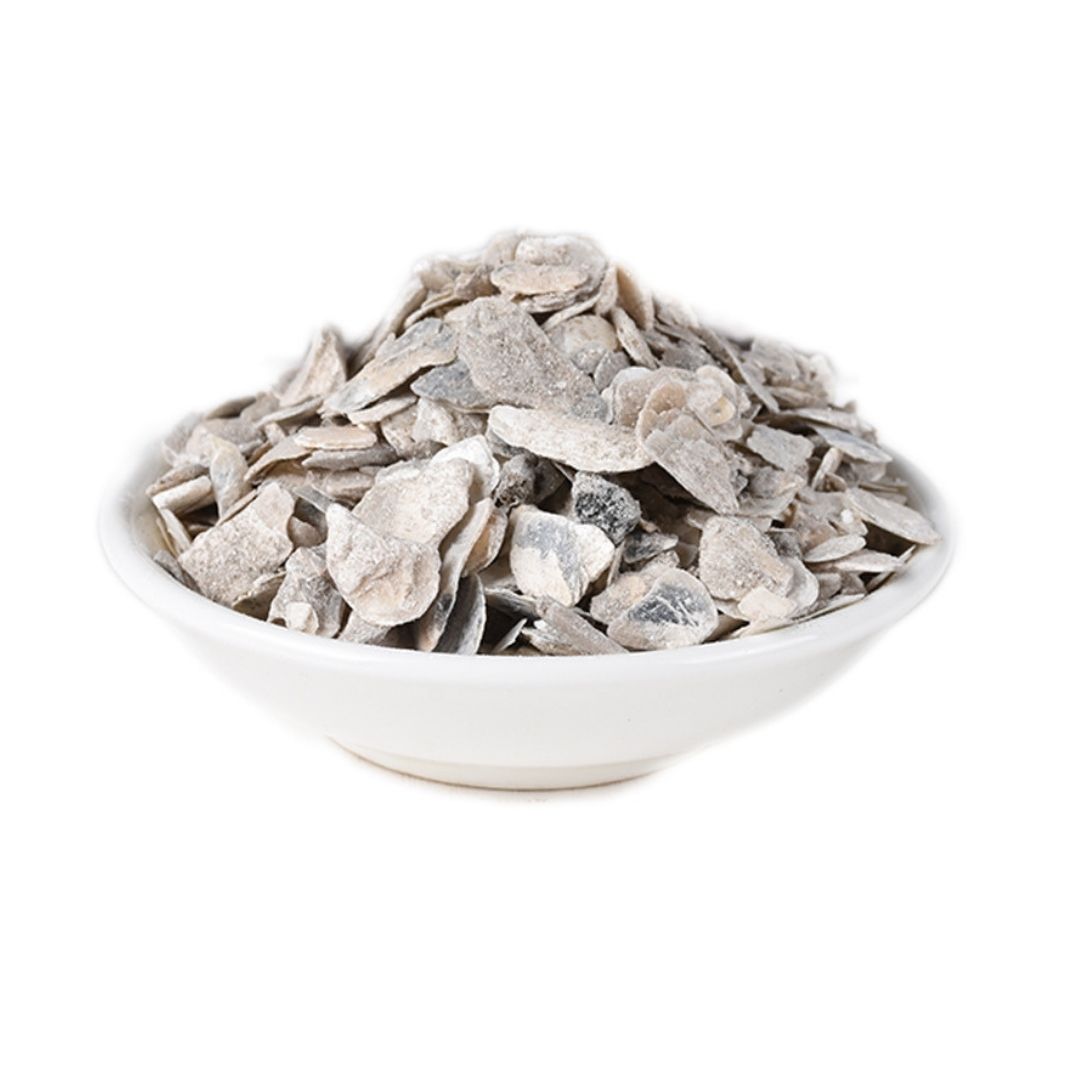
Oyster shell, known as Muli in traditional Chinese medicine (TCM), is a commonly used marine-derived substance. It is valued for its therapeutic properties, rooted in centuries of traditional application. The source of oyster shell are various species of oysters, contributing to its availability and use in different regions. It primarily addresses conditions related to the liver and kidneys, reflecting its channel tropism in TCM theory.
Main Active Ingredients
The main active ingredient in oyster shell is calcium carbonate (CaCO3) [1]. Additionally, it contains various trace elements such as magnesium, iron, and zinc, contributing to its therapeutic effects [2]. These components contribute to its ability to affect various physiological functions, and influence treatment outcomes.
Product Application Scenarios, Usage, and Dosage
Oyster shell is frequently used in TCM to address conditions like anxiety, insomnia, and irritability, due to its calming properties [3]. It can also be applied to soften hardened masses, such as nodules and scrofula, reflecting its ability to dissipate accumulations. The typical dosage for oyster shell ranges from 15 to 30 grams, usually decocted in water for oral administration [4]. It is often combined with other herbs to enhance its effects and target specific conditions.
Introduction to the Source Plant, Distribution, and Growth Environment
The oyster species that provide oyster shell are widely distributed in coastal areas around the world [5]. These oysters thrive in brackish and marine environments, typically attaching to rocks, shells, or other submerged structures. The growth and distribution of these oysters depend on factors like water temperature, salinity, and nutrient availability [6]. These environmental factors impact the quality and composition of the oyster shell.
Harvesting, Processing, and Storage
Oysters are typically harvested from the wild or cultivated in aquaculture farms. The shells are then collected, cleaned, and processed for medicinal use [7]. Processing often involves calcination, which enhances its therapeutic effects by making its components more bioavailable. The processed oyster shell should be stored in a dry, well-ventilated location to maintain its quality and efficacy [8].
Citations:
- Wang, J., et al. "Chemical Composition and Bioactivity of Oyster Shell." Journal of Marine Science and Technology 25.3 (2017): 456-462.
- Zhang, Y., et al. "Trace Element Analysis of Different Oyster Species." Food Chemistry 197 (2016): 1001-1007.
- Chen, L., et al. "The Calming Effects of Oyster Shell Extract on Anxiety." Phytotherapy Research 30.8 (2016): 1280-1286.
- Chinese Pharmacopoeia Commission. Pharmacopoeia of the People's Republic of China. Beijing: China Medical Science Press, 2015.
- FAO. "Cultured Aquatic Species Information Programme: Ostrea gigas." Food and Agriculture Organization of the United Nations, 2013.
- Xiao, Q., et al. "The Influence of Environmental Factors on Oyster Growth." Aquaculture 479 (2017): 713-720.
- Li, X., et al. "Processing Methods of Traditional Chinese Medicine: Oyster Shell." Chinese Herbal Medicines 8.2 (2016): 115-120.
- National Institute of Traditional Medicine. Traditional Chinese Medicine Materia Medica. Beijing: People's Medical Publishing House, 2000.
Mia Wu

Hi, I’m Mia Wu! I love helping customers discover the best natural ingredients for their products. With a passion for herbs, spices, and fungi, I work to make sure you get only the finest raw materials. Let's grow together! 🌱✨