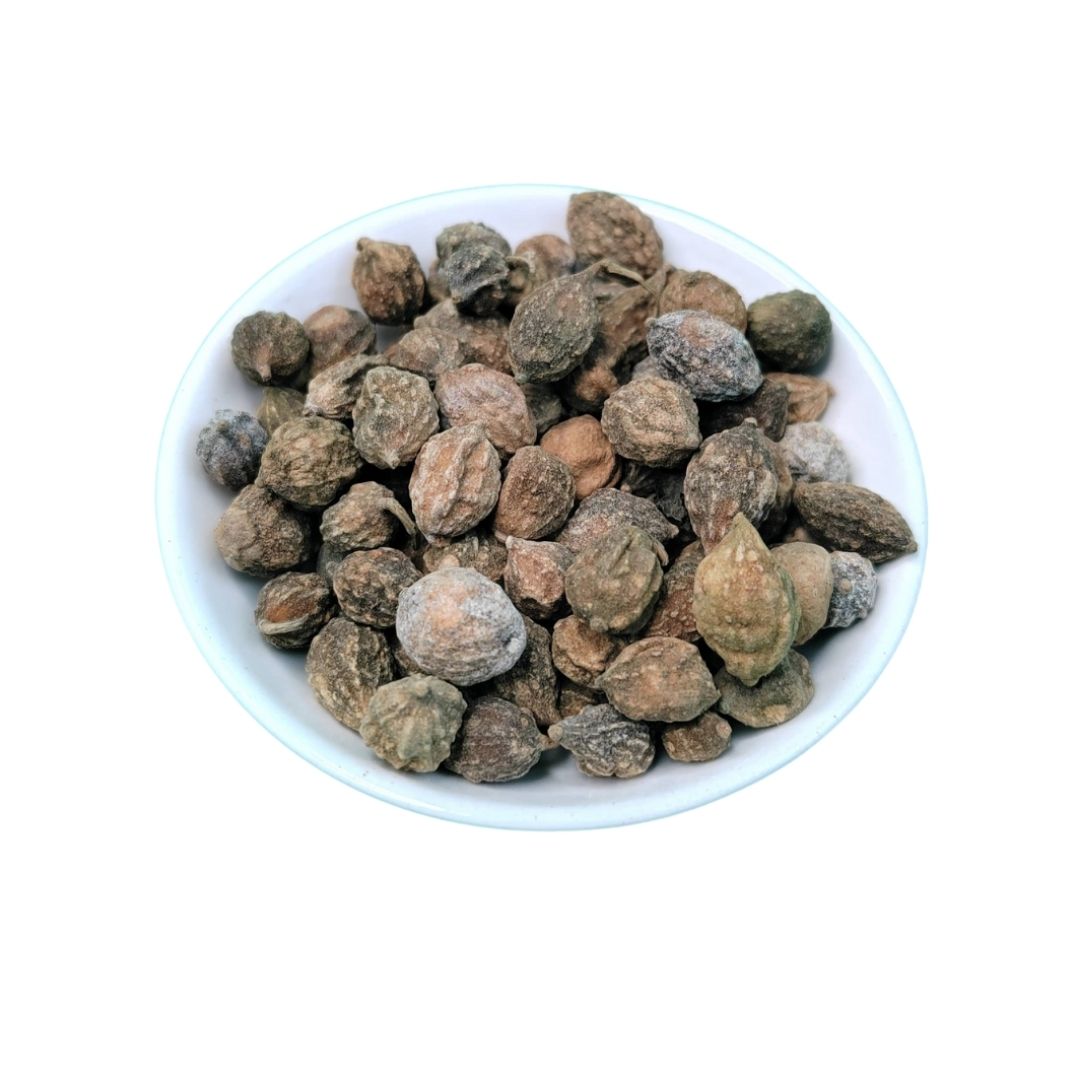


Product Introduction
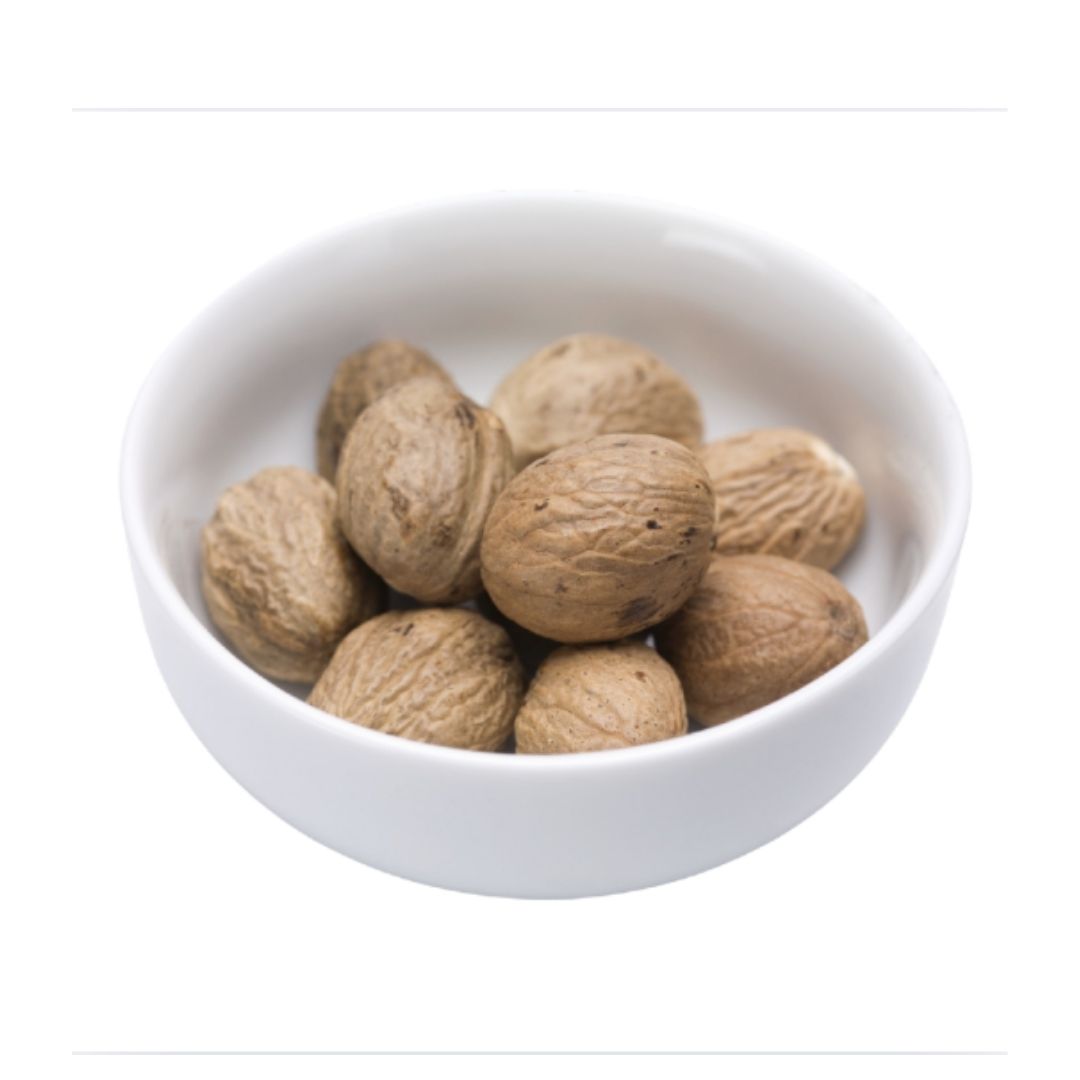
Nutmeg, derived from the Myristica fragrans tree, is a widely used spice known for its distinctive warm and aromatic flavor. The nutmeg seed is oval-shaped and typically found within the fruit of the nutmeg tree, which is native to the Spice Islands of Indonesia, particularly the Banda Islands. It is also cultivated in other tropical regions around the world [3].
The Myristica fragrans tree yields both nutmeg and mace, the latter being the outer covering or aril of the nutmeg seed. Nutmeg is commonly used in both sweet and savory dishes, offering a unique flavor profile. It is a popular ingredient in baked goods, such as pies, cakes, and cookies, as well as beverages like eggnog and mulled wine. In savory applications, nutmeg complements dishes containing cheese, vegetables, and meats [4].
Nutmeg's aromatic and flavor characteristics come from its chemical composition, which includes compounds like myristicin, elemicin, and safrole. These compounds contribute to nutmeg's distinct scent and taste. However, it is important to note that nutmeg should be used in moderation, as excessive consumption can lead to adverse effects due to the psychoactive properties of myristicin [5]. Overall, nutmeg is a versatile spice, celebrated for its culinary uses and complex flavor profile, making it a valued ingredient in various cuisines worldwide.
Aromatic Chemical Composition
Nutmeg's distinctive aroma and flavor profile are attributed to a complex blend of aromatic chemical compounds. Key components include myristicin, elemicin, safrole, and various terpenes. Myristicin is one of the most abundant compounds and contributes significantly to nutmeg's psychoactive properties when consumed in large quantities [5]. Elemicin adds to the spice's overall aroma and contributes to its flavor. Safrole, although present in smaller amounts, also plays a role in the spice's aromatic profile [6].
The presence of terpenes, such as pinene, camphene, and limonene, further enhances the complexity of nutmeg's aroma [7]. These terpenes contribute fresh, woody, and citrusy notes, enriching the overall sensory experience. The specific ratio and concentration of these compounds can vary based on factors such as the nutmeg's origin, processing methods, and storage conditions, leading to subtle differences in aroma and flavor [8].
What Types of Products Are Available?
Nutmeg is available in several forms to suit different culinary and industrial applications. Whole nutmeg seeds are favored for their long shelf life and potent flavor; they can be freshly grated as needed to provide the most intense aroma [9]. Ground nutmeg is another common form, offering convenience and ease of use, though it tends to lose its flavor more quickly than whole nutmeg [10].
Nutmeg oil, extracted from the nutmeg seeds through steam distillation, is used in the food industry as a flavoring agent and in aromatherapy for its therapeutic properties [11]. Nutmeg butter, a semi-solid fat obtained from the nutmeg seed, is used in cosmetic products for its moisturizing qualities and in some culinary applications [12]. Each form of nutmeg offers unique advantages depending on the specific application, allowing for versatility in both culinary and non-culinary uses.
Application Scenarios and Usage Dosage
Nutmeg is a versatile spice with a wide range of applications in the culinary field. Its warm, slightly sweet, and aromatic flavor makes it a popular addition to both sweet and savory dishes. In baking, nutmeg is commonly used in pies, cakes, cookies, and other desserts. For example, a pinch of nutmeg can enhance the flavor of apple pie or spice cakes, complementing other spices like cinnamon and cloves [13].
In beverages, nutmeg is a key ingredient in traditional drinks such as eggnog and mulled wine, where its warm flavor blends well with dairy, alcohol, and other spices. A small grating of fresh nutmeg over the top of a latte or cappuccino can also add a cozy and aromatic touch [14].
In savory dishes, nutmeg is often used to add depth and complexity to sauces, soups, and vegetable dishes. It pairs well with creamy sauces, such as béchamel, and is a common ingredient in gratins and casseroles. Nutmeg also complements vegetables like spinach, cauliflower, and sweet potatoes, enhancing their natural flavors [15]. In Italian cuisine, nutmeg is a traditional ingredient in ricotta cheese fillings for pasta dishes like ravioli and lasagna [16].
The appropriate dosage of nutmeg depends on the specific application and personal preference. In general, a small amount of nutmeg is sufficient to add flavor without overpowering the dish. A typical recipe might call for 1/4 to 1/2 teaspoon of ground nutmeg per batch of cookies or per serving of a creamy soup [17]. When using whole nutmeg, a few gratings from a microplane or fine grater are usually enough. It's important to use nutmeg sparingly, as excessive amounts can lead to unpleasant side effects due to its psychoactive compounds [5].
For beverages, a small grating of fresh nutmeg on top of a drink is often sufficient to provide aroma and flavor. In savory dishes, nutmeg can be added early in the cooking process to allow its flavor to meld with other ingredients. Experimentation is key to finding the right balance and determining the ideal dosage for individual taste preferences. Whether it's enhancing a holiday pie or adding warmth to a comforting soup, nutmeg is a versatile spice that can elevate a wide range of culinary creations.
Introduction to the Source Plant, Distribution, and Growing Environment
The spice nutmeg comes from the Myristica fragrans tree, an evergreen tree native to the Banda Islands in Indonesia, often referred to as the "Spice Islands." This tree typically grows to a height of 5 to 13 meters (16 to 43 feet) and is cultivated for both nutmeg and mace—mace being the dried, outer covering of the nutmeg seed [3].
The Myristica fragrans tree thrives in tropical climates with high humidity and well-drained soil. It requires consistent rainfall and temperatures between 20°C and 30°C (68°F and 86°F) [18]. The tree begins to bear fruit after about 5 to 8 years, reaching full production at around 20 years, and can continue to produce for up to 75 years [19].
Today, Myristica fragrans is cultivated in various tropical regions, including Indonesia, Grenada, India, Malaysia, Sri Lanka, and the Caribbean [20]. Grenada, in particular, is known as the "Spice Isle" due to its significant production of nutmeg and other spices. The global distribution of nutmeg cultivation reflects the spice's economic importance and widespread culinary use. The tree's specific environmental requirements dictate its cultivation in warm, humid, and tropical climates around the world.
Harvesting, Processing, and Storage Preservation
Harvesting nutmeg is a labor-intensive process that typically occurs two to three times a year. The fruits are collected when they are fully ripe and have split open, revealing the nutmeg seed covered by the mace [21].
After harvesting, the mace is carefully separated from the nutmeg seed and dried separately. The nutmeg seeds are then dried gradually over a period of several weeks, traditionally using sunlight and air. During the drying process, the nutmeg shrinks and hardens, and the kernel rattles inside the shell [22]. After drying, the nutmeg shells are cracked open, and the kernels are sorted and graded based on size and quality.
Proper storage is essential to preserve the flavor and aroma of nutmeg. Whole nutmeg seeds have a longer shelf life than ground nutmeg and should be stored in airtight containers in a cool, dark, and dry place [2]. Ground nutmeg should also be stored in airtight containers away from light and moisture to prevent it from losing its potency. Properly stored whole nutmeg can last for several years, while ground nutmeg is best used within six months to a year for optimal flavor [23].
Citations
[1] Guenther, E. (1949). The Essential Oils, Vol. III. D. Van Nostrand Company, Inc.
[2] Raghavan, S. (2007). Handbook of Spices, Seasonings, and Flavorings, Second Edition. CRC Press.
[3] Purseglove, J. W. (1968). Tropical Crops: Dicotyledons 2. Longmans, Green and Co. Ltd.
[4] McGee, H. (2004). On Food and Cooking: The Science and Lore of the Kitchen. Scribner.
[5] Anderson, L. A., Mullin, J. M., & Woolfson, A. D. (2001). Acute nutmeg poisoning. Journal of Emergency Medicine, 20(1), 55-56.
[6] Sangari, S., & Acharya, S. (2013). Nutmeg (Myristica fragrans Houtt.): A review. Pharmacognosy Journal, 5(5), 207-216.
[7] Baur, R., & Grosch, W. (1998). Characterization of the aroma compounds of nutmeg. European Food Research and Technology, 207(1-2), 74-78.
[8] Verma, R. S., Padalia, R. C., Chauhan, A., Verma, S. K., & Yadav, A. (2010). Chemical characterization and antifungal activity of Nutmeg oil of Myristica fragrans from India. Journal of Essential Oil Research, 22(6), 568-572.
[9] Lawless, H. T., & Heymann, H. (2010). Sensory Evaluation of Food: Principles and Practices. Springer Science & Business Media.
[10] Tainter, D. R., & Grenis, A. T. (2001). Spices and Seasonings: A Food Technology Handbook. Wiley-VCH.
[11] Raina, V. K., Verma, S. C., Agarwal, K., Kumar, A., & Syamasundar, J. (2001). Essential oil composition of Myristica fragrans from Little Andaman Island, India. Flavour and Fragrance Journal, 16(4), 288-290.
[12] Dweck, A. C. (2016). Handbook of Natural Ingredients, Second Edition. CRC Press.
[13] Davidson, A. (2014). The Oxford Companion to Food. Oxford University Press.
[14] Herbst, S. T., & Herbst, R. (2009). The Food Lover's Companion: Comprehensive Definitions of Nearly 6000 Food, Drink, and Culinary Terms. Barron's Educational Series.
[15] Bittman, M. (2007). How to Cook Everything: Simple Recipes for Great Food. Wiley.
[16] Hazan, M. (1992). Essentials of Classic Italian Cooking. Alfred A. Knopf.
[17] Norman, J. (2011). The Complete Book of Spices. DK Publishing.
[18] Parthasarathy, V. A., Nair, R. R., Zachariah, T. J., & Srinivasan, V. (2008). Chemistry of Spices. CAB International.
[19] Shafi, P. M., Rosamma, M. K., Jantan, I., & Bucar, F. (2002). Antibacterial activity of nutmeg extract against Bacillus subtilis. Journal of Bioscience, 27(5), 481-486.
[20] Peter, K. V. (2004). Handbook of Herbs and Spices, Volume 2. Woodhead Publishing.
[21] Pruthi, J. S. (1998). Spices and Condiments: Chemistry, Microbiology, Technology. Springer Science & Business Media.
[22] Salzer, U. J. (2003). Dried spices. Springer.
[23] Farrel, K. T. (1985). Spices, Condiments and Seasonings. AVI Publishing Company.
Mia Wu

Hi, I’m Mia Wu! I love helping customers discover the best natural ingredients for their products. With a passion for herbs, spices, and fungi, I work to make sure you get only the finest raw materials. Let's grow together! 🌱✨