

Product Introduction
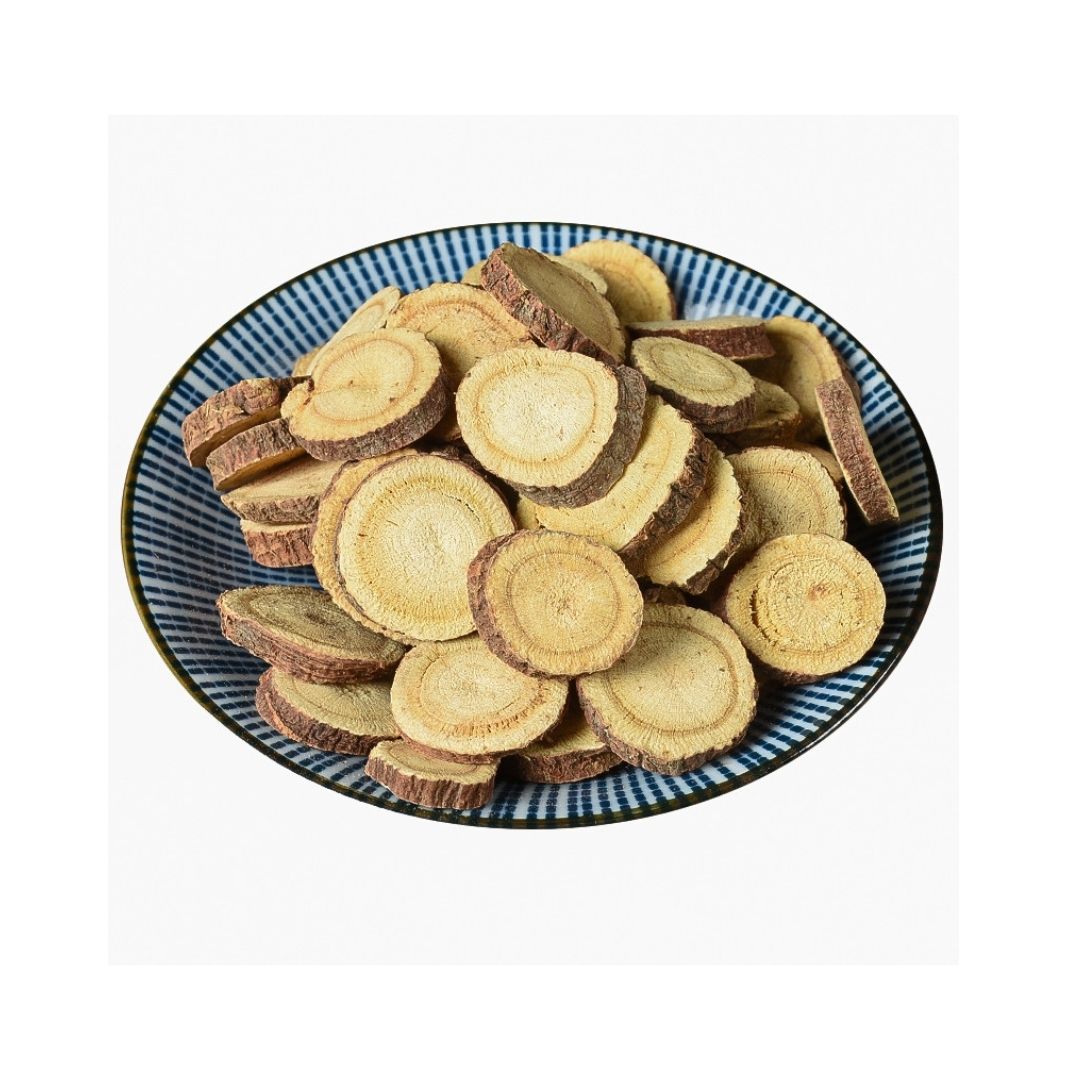
Licorice, or Gan Cao, is a fundamental herb in traditional Chinese medicine, valued for its sweet flavor and versatile applications. It harmonizes herbal formulas, reduces inflammation, and addresses respiratory and digestive ailments.
Main Active Ingredients
The primary active ingredient in licorice is glycyrrhizic acid, responsible for its sweetness and many of its therapeutic effects. Flavonoids and coumarins also contribute to its anti-inflammatory and antioxidant properties. [1]
Product Application Scenarios, Usage, and Dosage
Licorice is commonly used in various scenarios, including relieving coughs, soothing sore throats, and reducing inflammation in the digestive tract. It is also used to harmonize other herbs in complex formulas. The typical dosage is 3 to 15 grams per day, usually decocted in water. [2]
Introduction to the Source Plant, Distribution, and Growth Environment
Glycyrrhiza uralensis, the source plant of licorice, is distributed across various regions, including China, Russia, and parts of Europe. It thrives in arid and semi-arid environments, often found in grasslands and along riverbanks. [3]
Harvesting, Processing, and Storage
Harvesting typically occurs in the autumn, after the plants are several years old. The roots and rhizomes are dug up, cleaned, and dried in the sun. Properly dried licorice should be stored in a cool, dry place to maintain its quality and prevent spoilage. [4]
Citations:
- R, Armanini D, Carvalho RA. Glycyrrhetinic acid in the treatment of liver disease: a systematic review. World J Gastroenterol. 2018 Feb 7;24(5):560-572.
- Chen, John K., and Tina T. Chen. Chinese Medical Herbology and Pharmacology. Art of Medicine Press, 2004.
- Duke, James A. Handbook of Medicinal Herbs. CRC Press, 2002.
- Bensky, Dan, et al. Chinese Herbal Medicine: Materia Medica, 3rd Edition. Eastland Press, 2004.
Mia Wu

Hi, I’m Mia Wu! I love helping customers discover the best natural ingredients for their products. With a passion for herbs, spices, and fungi, I work to make sure you get only the finest raw materials. Let's grow together! 🌱✨