

Product Introduction
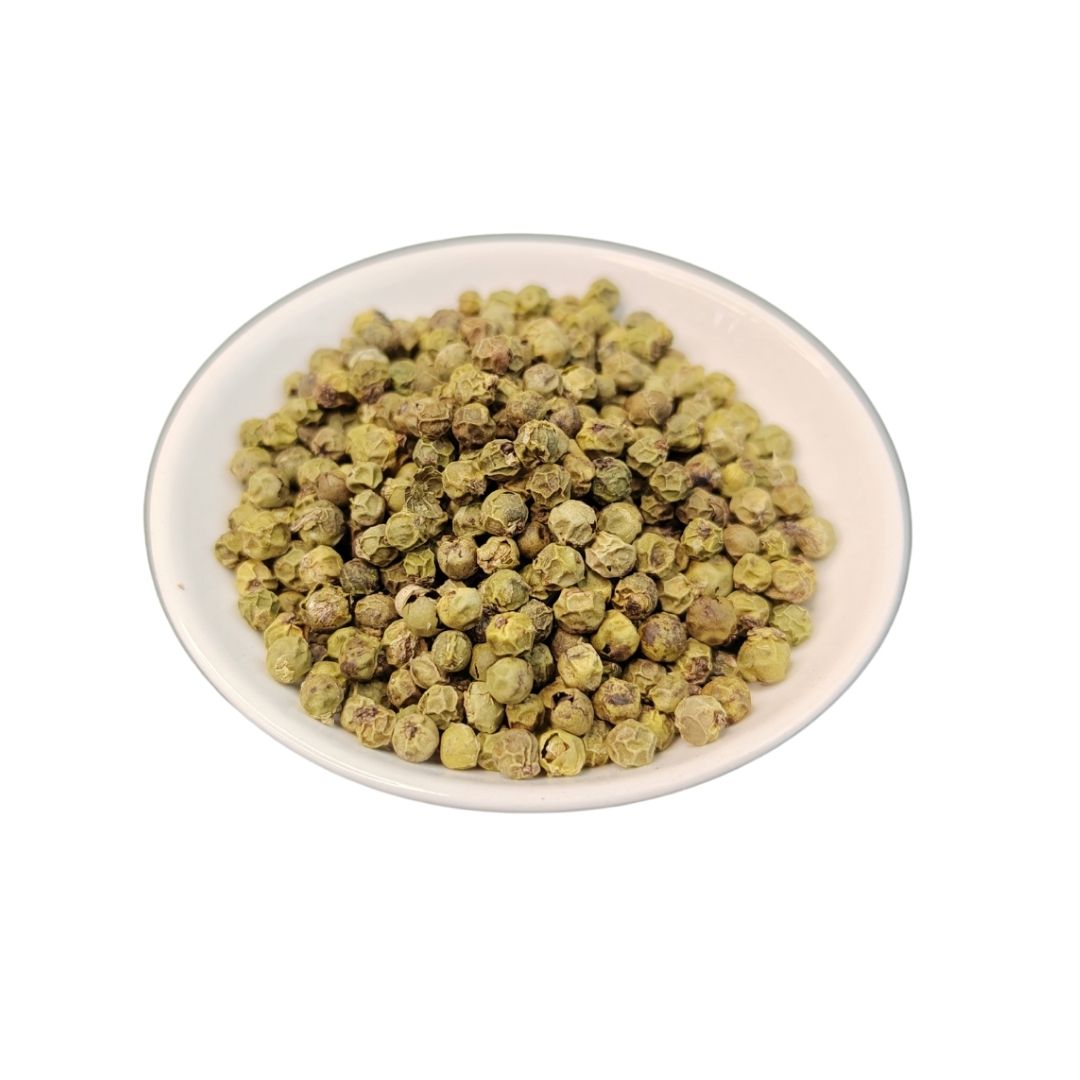
Green peppercorns are the unripe berries of the Piper nigrum plant, harvested before they ripen and turn black, red, or white. Unlike their more pungent counterparts, green peppercorns offer a milder, fresher flavor profile. These peppercorns are typically preserved in brine, vinegar, or freeze-dried to retain their color and delicate taste.
The Piper nigrum plant, a climbing vine native to South India, produces fruits known as peppercorns, which are a globally traded spice. Green peppercorns are particularly popular in Southeast Asian cuisines, where their fresh, herbaceous notes complement various dishes. They are also increasingly used in Western cooking to add a unique twist to sauces, meats, and vegetable preparations.
Fresh green peppercorns are highly perishable, making them less common outside of regions where they are grown. Brining, pickling, or freeze-drying are essential methods to preserve these peppercorns for wider distribution and culinary applications. Each preservation method imparts a slightly different texture and flavor, influencing their use in various recipes.
The subtle heat and bright flavor of green peppercorns make them a versatile ingredient for both savory and sweet dishes. Chefs and home cooks value them for their ability to add complexity and a refreshing touch to meals, rather than overpowering heat. Their use is spreading, and more people are exploring different flavors in culinary practices around the world.
Aromatic Chemical Composition
The aromatic profile of green peppercorns is attributed to a variety of volatile chemical compounds. Key components include:
- Monoterpenes: Sabinene, limonene, and pinene contribute to the fresh, green, and citrusy notes (Raina et al., 2016).
- Sesquiterpenes: Caryophyllene and humulene add woody and spicy undertones (Raina et al., 2016).
- Piperine: Although less concentrated than in black peppercorns, piperine still contributes to the mild pungency (Jagdale et al., 2014).
- Other Volatiles: Oxygenated terpenes and trace amounts of aldehydes and alcohols further enhance the complexity of the aroma (Raina et al., 2016).
What Types of Products are Available?
Green peppercorns are available in several forms:
- Fresh: Highly perishable and available mainly in regions where they are grown.
- Brined: Preserved in brine (saltwater solution) to retain moisture and flavor.
- Pickled: Preserved in vinegar, which adds a tangy flavor.
- Freeze-Dried: Dehydrated to preserve color and flavor, offering a longer shelf life.
- Canned: Packed in water or brine, offering a convenient, shelf-stable option.
Application Scenarios and Usage Dosage
Green peppercorns are a versatile ingredient in numerous culinary applications. Their fresh, mild flavor makes them suitable for dishes where black pepper's assertive pungency might be overwhelming.
Culinary Applications:
- Sauces: Green peppercorn sauce is a classic pairing for steak. The peppercorns are often crushed or left whole and added to a cream-based or wine-based sauce, complementing the richness of the meat (McGee, 2004). Dosage: 1-2 tablespoons of brined or freeze-dried peppercorns per cup of sauce.
- Soups and Stews: They can be added to soups and stews to impart a subtle peppery flavor (Herbst & Herbst, 2009). Add them during the last few minutes of cooking to preserve their aroma. Dosage: 1 teaspoon of peppercorns per serving.
- Seafood: Green peppercorns pair well with seafood. They can be used in marinades or sprinkled over grilled or pan-fried fish (Herbst & Herbst, 2009). Dosage: 1/2 teaspoon per fillet.
- Vegetable Dishes: Add a fresh, peppery note when used with vegetables. Sprinkle them over salads, stir-fries, or roasted vegetables (McGee, 2004). Dosage: 1/4 teaspoon per serving.
- Asian Cuisine: Often used in Thai and other Southeast Asian dishes, adding a fresh element to curries, stir-fries, and salads (Smith, 2010). Dosage: 1-2 teaspoons per dish.
- Spice Blends: Incorporated into spice blends for sausages, marinades, and dry rubs (Herbst & Herbst, 2009). Dosage: Varies depending on the blend, but generally 5-10% of the total spice mix.
Usage Methods:
- Fresh: Use immediately as they are highly perishable. Commonly used in regions where they are grown.
- Brined or Pickled: Rinse before use to remove excess salt or vinegar. They can be used whole, crushed, or chopped.
- Freeze-Dried: Can be rehydrated in warm water or added directly to dishes. They have a more concentrated flavor, so use sparingly.
- Cooking Time: Add towards the end of cooking to retain their volatile oils and fresh flavor. Overheating can cause them to lose their aroma.
Dosage Considerations:
The appropriate dosage depends on the form of green peppercorns used and personal taste preferences. Start with a small amount and adjust to taste. Freeze-dried peppercorns have a more concentrated flavor than brined or fresh ones, so use them sparingly.
Introduction to the Source Plant, Distribution, and Growing Environment
Piper nigrum, the source of green peppercorns, is a perennial climbing vine belonging to the Piperaceae family (Ravindran, 2000). Native to the tropical regions of South India, it thrives in hot, humid climates. The plant features heart-shaped leaves, slender spikes of small white flowers, and clusters of berries that turn from green to red as they ripen.
Distribution:
- Primary Growing Regions: India (especially the Malabar Coast), Indonesia, Malaysia, Vietnam, Brazil, and Sri Lanka (Parthasarathy et al., 2008).
- Climate Requirements: Requires a warm, humid climate with temperatures ranging from 20°C to 35°C and annual rainfall between 2000mm and 2500mm (Ravindran, 2000).
- Soil: Well-drained soil rich in organic matter, with a slightly acidic to neutral pH (5.5 to 7.0) (Nair, 2010).
- Growing Conditions: Typically grown on supports such as trees or poles, requiring shade, especially during the initial growth stages (Parthasarathy et al., 2008).
Harvesting, Processing, and Storage Preservation
Harvesting:
Green peppercorns are harvested when the berries are fully grown but still green, usually about 6-8 months after flowering (Zachariah, 2008). The spikes are hand-picked to ensure the berries are at the correct stage of maturity.
Processing:
- Fresh Peppercorns: Used immediately but are highly perishable.
- Brining: Berries are immersed in a salt solution to preserve them. The concentration of salt varies, but typically ranges from 10-20%. The brining process can last from a few days to several weeks (Zachariah, 2008).
- Pickling: Involves soaking the peppercorns in vinegar, often with added spices like mustard seeds or peppercorns, to impart a tangy flavor and extend shelf life (Smith, 2010).
- Freeze-Drying: The green peppercorns are frozen and then subjected to a vacuum, which removes the moisture, retaining their color and flavor. This method results in a lightweight product with a long shelf life (Ratti, 2001).
Storage Preservation:
- Brined and Pickled Peppercorns: Stored in airtight containers in the refrigerator to prevent spoilage and maintain quality.
- Freeze-Dried Peppercorns: Stored in airtight containers in a cool, dark, and dry place. Protect from moisture to prevent rehydration (Ratti, 2001).
- Shelf Life: Brined and pickled peppercorns can last several months in the refrigerator. Freeze-dried peppercorns can last up to a year when stored properly (Smith, 2010).
Citations
- Herbst, S.T., & Herbst, R. (2009). The New Food Lover’s Companion: Comprehensive Definitions of Nearly 6000 Food, Drink, and Culinary Terms. Barron’s Educational Series.
- Jagdale, S. C., Agarkar, V. V., Nirmal, S. A., & Patil, R. Y. (2014). Piper nigrum: A brief review. Journal of Pharmacognosy and Phytochemistry, 2(6), 72-78.
- McGee, H. (2004). On Food and Cooking: The Science and Lore of the Kitchen. Scribner.
- Nair, P. K. R. (2010). An Introduction to Agroforestry. Springer.
- Parthasarathy, V. A., Nair, R. R., Zachariah, T. J., & Anandaraj, M. (2008). Pepper. Indian Council of Agricultural Research.
- Raina, V. S., Goyal, S., & Kumar, S. (2016). Volatile oil composition of green, white and black peppers (Piper nigrum L.) of Indian origin. Journal of Essential Oil Bearing Plants, 19(6), 1342-1349.
- Ratti, C. (2001). Hot air and freeze-drying of high-value foods: a review. Journal of Food Engineering, 49(4), 311-319.
- Ravindran, P. N. (2000). Black Pepper (Piper nigrum). Harwood Academic Publishers.
- Smith, A. F. (2010). The Oxford Encyclopedia of Food and Drink in America. Oxford University Press.
- Zachariah, T. J. (2008). Chemistry of spices. Nur Research Network.
Mia Wu

Hi, I’m Mia Wu! I love helping customers discover the best natural ingredients for their products. With a passion for herbs, spices, and fungi, I work to make sure you get only the finest raw materials. Let's grow together! 🌱✨