

Product Introduction
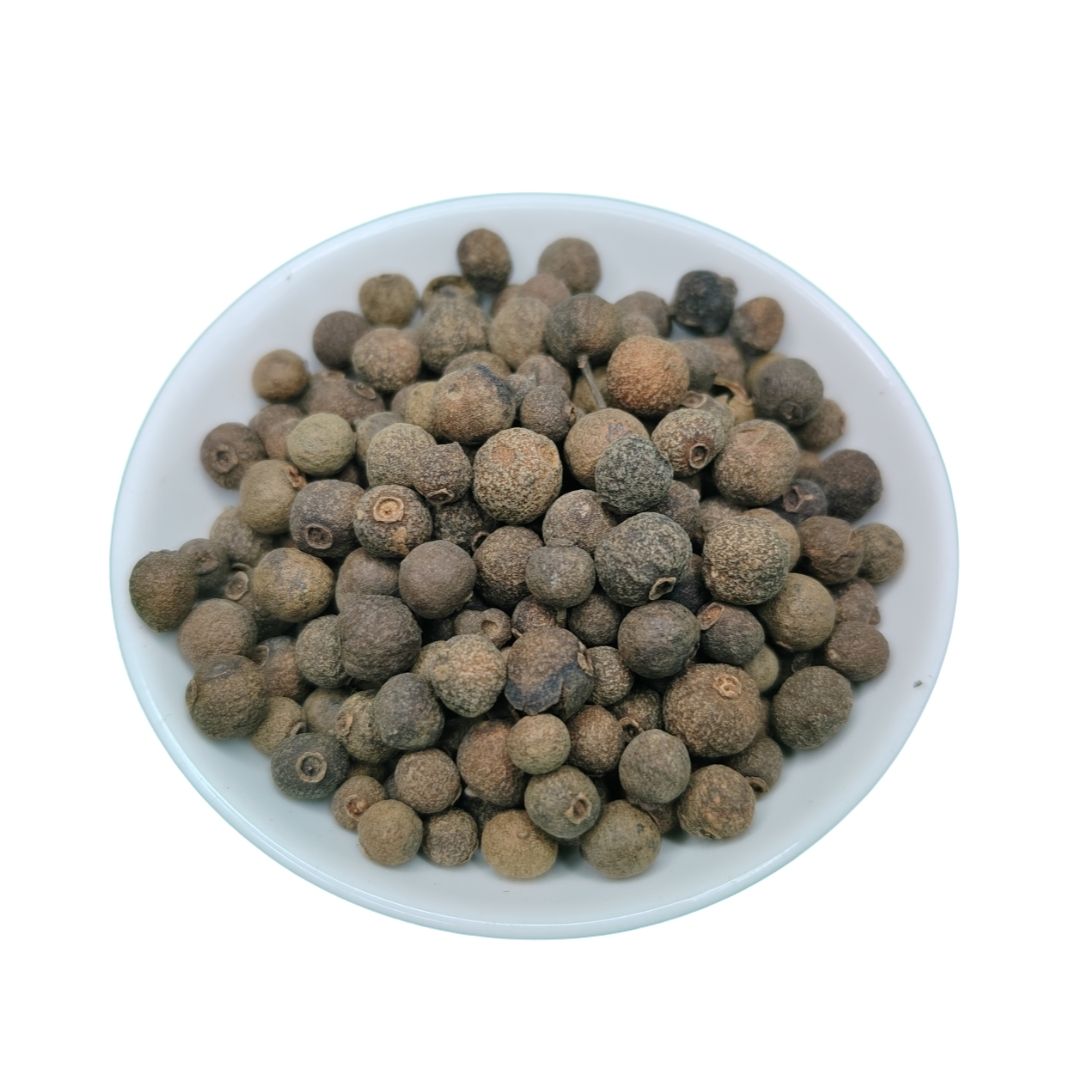
Allspice,scientifically known as Pimenta dioica, is derived from the dried berries of the allspice tree, native to the West Indies and Central America [2]. The name "allspice" comes from its flavor, which is reminiscent of a combination of cloves, nutmeg, cinnamon, and pepper [3]. The berries are harvested when green and unripe and then sun-dried until they turn reddish-brown. This drying process is crucial for developing the spice’s characteristic flavor and aroma.
The allspice tree is an evergreen that can grow up to 10–18 meters (33–59 feet) tall [4]. It thrives in warm, humid climates, requiring well-drained soil and protection from strong winds. The trees are typically propagated from seeds, although vegetative propagation methods such as grafting can also be used. Allspice is a key ingredient in Caribbean cuisine, particularly in Jamaican jerk seasoning, and is also widely used in European and Middle Eastern dishes.
Beyond its culinary uses, allspice has a history of medicinal applications. The indigenous peoples of the Americas used allspice for its antiseptic and digestive properties [5]. Today, allspice oil is sometimes used in aromatherapy for its warming and stimulating effects. The spice's versatility has made it a valuable commodity throughout history, contributing to its global popularity. Its complex flavor profile enhances both sweet and savory dishes, making it a staple in many kitchens worldwide.
Aromatic Chemical Composition
The characteristic aroma of allspice is primarily due to its rich composition of volatile organic compounds. Eugenol is one of the most abundant compounds, contributing significantly to its clove-like aroma and flavor [6]. Cineole (also known as eucalyptol) adds a fresh, camphoraceous note, while caryophyllene imparts a woody and spicy nuance. Quercetin serves as a flavanol contributing anti-oxidant properties to the spice [1].
These compounds are present in varying concentrations depending on factors such as the geographical origin of the allspice, the drying process, and storage conditions. Other trace compounds, such as limonene, contribute to the overall complexity of the aroma. The interplay of these chemical components creates the distinctive, warm, and multifaceted scent profile that makes allspice unique among spices. Precise extraction and analysis techniques, such as gas chromatography-mass spectrometry (GC-MS), are often employed to identify and quantify these volatile compounds, ensuring quality control and consistency in allspice products [7].
What Types of Products Are Available?
Allspice is available in several forms, each suited to different culinary and industrial applications.
- Whole Allspice Berries: These are the dried, unground berries of the Pimenta dioica tree. They offer the longest shelf life and are ideal for dishes where a slow release of flavor is desired, such as in pickles, brines, and long-simmering stews.
- Ground Allspice: Ground allspice is produced by grinding the whole berries into a fine powder. This form is convenient for baking and quick seasoning, as it disperses flavor evenly throughout the dish. However, it tends to lose its aroma more quickly than whole berries.
- Allspice Oil: Extracted from the berries through steam distillation, allspice oil is a concentrated form used in flavoring liqueurs, perfumes, and aromatherapy products. It should be used sparingly due to its potency.
- Allspice Oleoresin: This is a semi-solid extract containing both volatile and non-volatile components of allspice. It is commonly used in the food industry for flavoring processed foods, providing a consistent and standardized flavor profile [8].
Each form offers unique advantages depending on the intended use, allowing chefs and manufacturers to select the most appropriate option for their specific needs.
Application Scenarios and Usage Dosage
In culinary applications, allspice is incredibly versatile. It is a staple in Caribbean cuisine, most notably as a key ingredient in Jamaican jerk seasoning, where it is used to marinate meats like chicken and pork [9]. The dosage for jerk seasoning can range from 1 to 2 teaspoons of ground allspice per pound of meat, depending on the desired intensity.
In European and North American baking, ground allspice is frequently used in spiced cakes, cookies, and pies [10]. For example, in pumpkin pie, a typical recipe might call for ½ to 1 teaspoon of ground allspice per pie, complementing other warm spices like cinnamon and nutmeg. It is also a common ingredient in mulled wine and cider, where a few whole allspice berries are added to the simmering liquid to infuse it with flavor, allowing a more controlled release of flavor.
In Middle Eastern cuisine, allspice is used in stews and rice dishes, often combined with meats like lamb or beef. In these savory applications, the dosage is generally around ¼ to ½ teaspoon of ground allspice per serving, adding depth and warmth to the dish. Allspice is also frequently found in pickling spices, where whole berries are used to flavor and preserve vegetables. A typical pickling brine might include 1 to 2 tablespoons of whole allspice berries per quart of liquid [11].
Additionally, allspice can be used in sauces, such as barbecue sauces and marinades, where its complex flavor profile enhances the overall taste. In these cases, the dosage is usually about ½ to 1 teaspoon of ground allspice per cup of sauce. When using allspice oil, it is important to use it sparingly due to its high concentration of flavor compounds. A single drop or two can be sufficient to flavor an entire dish or batch of cookies. The versatility of allspice extends to both sweet and savory dishes, making it a valuable spice in many culinary traditions [12].
Introduction to the Source Plant, Distribution, and Growing Environment
The allspice tree, Pimenta dioica, belongs to the Myrtaceae family and is native to the West Indies, Central America, and parts of Mexico [13]. The tree is an evergreen that typically grows to a height of 10 to 18 meters (33 to 59 feet), characterized by its smooth, gray bark and aromatic leaves. The leaves are oblong in shape and emit a fragrant scent when crushed, similar to that of the berries.
Allspice trees thrive in warm, humid climates with average temperatures between 20°C and 30°C (68°F and 86°F). They require well-drained soil, ideally rich in organic matter, and ample rainfall throughout the year [14]. The trees are often found growing in hilly or mountainous regions, where the elevation provides good drainage and protection from strong winds.
While allspice is native to the Americas, it has been introduced to other tropical regions, including parts of Asia and Africa, although its commercial cultivation remains largely concentrated in its native regions. Jamaica is particularly known for producing high-quality allspice, with the island's unique climate and soil conditions contributing to the spice's distinctive flavor profile [15]. Allspice trees are typically propagated from seeds, which are sown in nurseries and then transplanted to the field. Vegetative propagation methods, such as grafting, can also be used to propagate desired traits, such as high fruit yield or disease resistance.
Harvesting, Processing, and Storage Preservation
The harvesting of allspice berries is a labor-intensive process that typically occurs during the rainy season, from July to September [16]. The berries are harvested when they are fully grown but still green and unripe. Harvesting at this stage ensures the highest concentration of essential oils, which contribute to the spice's characteristic flavor and aroma. Skilled harvesters carefully pluck the clusters of berries by hand, often using long poles or ladders to reach the higher branches.
Once harvested, the berries are spread out in thin layers on concrete or bamboo platforms to dry in the sun. This drying process, which can take several days to two weeks, is crucial for developing the spice's flavor and preserving its quality [17]. The berries are turned regularly to ensure even drying and prevent mold growth. During drying, the berries change color from green to reddish-brown, indicating that they are ready for further processing.
After drying, the allspice berries are cleaned to remove any debris or foreign materials. They may also be sorted by size and quality. The dried berries can be sold whole or ground into a powder using mechanical grinders. Ground allspice is more convenient to use but tends to lose its aroma more quickly than whole berries.
To preserve the quality and flavor of allspice, it is essential to store it properly. Whole allspice berries should be stored in airtight containers in a cool, dry, and dark place [18]. Ground allspice should be stored similarly but has a shorter shelf life due to its increased surface area, which allows for faster oxidation and loss of volatile compounds. Properly stored whole allspice berries can last for several years, while ground allspice is best used within six months to a year to ensure optimal flavor.
Citations:
[1] : Janes, D. E.,женьшень, B. D., Kreft, S., & Vovk, I. (2009). Determination of quercetine in allspice (Pimenta dioica) by capillary electrophoresis. Acta Chim. Slov, 56(4), 872-876.
[2] : Raghavan, S. (2006). Handbook of spices, seasonings, and flavorings. CRC press.
[3] : Purseglove, J. W., Brown, E. G., Green, C. L., & Robbins, S. R. J. (1981). Spices, Volume 2. Longman.
[4] : Grosvenor, A., Gothard, P. K., & Rimmer, D. L. (2015). The impact of shade on the growth and photosynthetic performance of young allspice (Pimenta dioica) plants. Photosynthetica, 53(3), 421-430.
[5] : Duke, J. A. (2001). Handbook of phytochemical constituents of GRAS herbs and other economic plants. CRC press.
[6] : De Souza, M. O., de Barros Fernandes, R. V., Freire, A. L., Oliveira, T. L., Rodrigues, J. A. R., & de Paula Ferreira, G. (2015). Chemical composition and antioxidant, antibacterial, and anti-acetylcholinesterase activities of the allspice (Pimenta dioica) essential oil. Molecules, 20(1), 174-188.
[7] : McLeod, A. J., & Pieris, N. M. (1984). Volatile aroma constituents of allspice (Pimenta dioica). Journal of Agricultural and Food Chemistry, 32(3), 577-581.
[8] : Govindarajan, V. S. (1982). Spices—chemistry, technology and quality: critical reviews in food science and nutrition. Critical Reviews in Food Science & Nutrition, 17(3), 189-318.
[9] : De Lisser, R. M. (2014). Caribbean culinary culture. Springer.
[10] : Figoni, P. (2010). How baking works: exploring the fundamentals of baking science. John Wiley & Sons.
[11] : Hertzberg, S., Hertzberg, E., & Rothe, R. (2016). Mastering pickles: the complete guide to pickling vegetables, fruits, meats, fish, game, and eggs. Clarkson Potter.
[12] : Tainter, D. R., & Grenis, A. T. (2001). Spices and seasonings: a food technology handbook. Wiley-VCH.
[13] : Nair, K. P. P. (2017). The agronomy and economy of important tree crops of the developing world. Academic Press.
[14] : Thompson, A. K. (2003). Fruit and vegetables: harvesting, handling and storage. Blackwell Publishing.
[15] : Barker, D., & McLeod, A. (2005). Jamaica allspice: a scientific status report. Economic Botany, 59(2), 103-110.
[16] : Marriott, J., & Lancaster, P. A. (1983). Banana ripening technology in Jamaica. Tropical Science, 24(1), 35-44.
[17] : Fellows, P. (2002). Food processing technology: principles and practice. Woodhead publishing.
[18] : Kilcast, D. (2000). Food spoilage microorganisms. CRC press.
Mia Wu

Hi, I’m Mia Wu! I love helping customers discover the best natural ingredients for their products. With a passion for herbs, spices, and fungi, I work to make sure you get only the finest raw materials. Let's grow together! 🌱✨