

Product Introduction
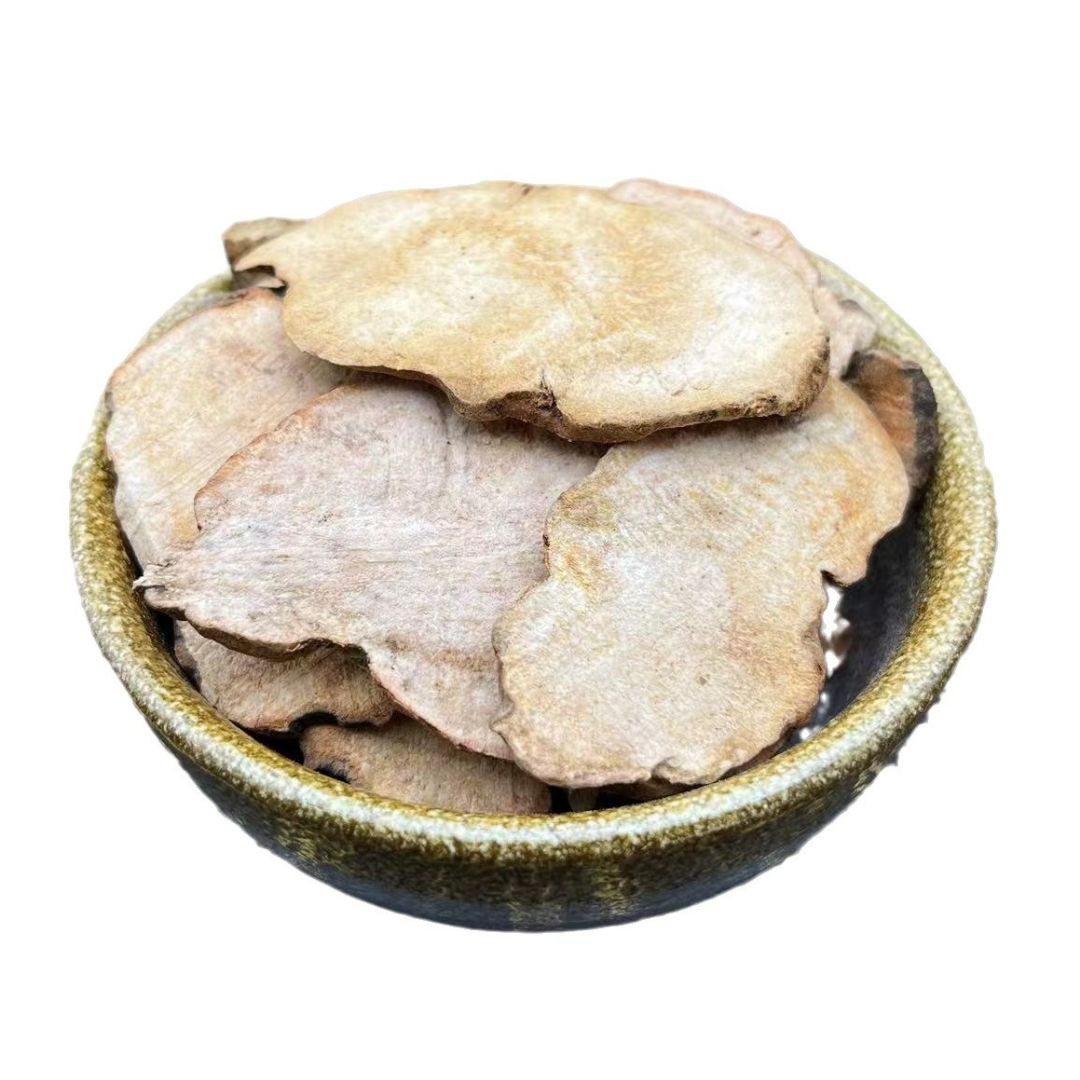
Tuckahoe peel, or Fu Ling Pi, is the external layer of Poria cocos, a mushroom-like fungus that symbiotically grows on the roots of pine trees, especially the Masson pine. Having been recognized and employed for centuries in traditional Chinese medicine, it serves as a diuretic and is believed to assist in resolving dampness, supporting its historical use in treating edema and related conditions. Typically, the outer brown skin is peeled from Poria cocos and dried for medicinal usage. Its inclusion in herbal formulas is favored for its mild properties, making it suitable for different patient populations.
Main Active Ingredients
The prominent active components in Tuckahoe peel encompass polysaccharides, triterpenoids, and diverse bioactive substances. The polysaccharides, known for their immunomodulatory properties, influence the body's defense mechanisms. Triterpenoids contribute to its anti-inflammatory and antioxidant effects. The synergistic interplay of these elements is believed to underpin the therapeutic effects of the peel, fostering overall wellness. Further research is required to explore the specific mechanisms and efficacy of individual components.
Product Application Scenarios, Usage, and Dosage
Tuckahoe peel is commonly utilized in traditional herbal formulas designed to address edema and dampness-related conditions, such as urinary difficulty and abdominal distension. Often incorporated into decoctions, it can be combined with other herbs, like Zhu Ling and Ze Xie, to augment its diuretic effects. The standard dosage typically ranges from 3 to 15 grams per day, administered in decoctions or herbal teas. The appropriate dosage may vary depending on the patient's age, weight, and specific health condition, therefore a health care provider's guidance is essential.
Introduction to the Source Plant, Distribution, and Growth Environment
Poria cocos, the source of Tuckahoe peel, is a fungus belonging to the Polyporaceae family. It predominantly grows in symbiotic association with the roots of pine trees, especially Masson pine. The fungus has a wide geographical distribution, including regions in China, Japan, and North America. It thrives in well-drained, sandy soils, usually in forested areas. The growth of Poria cocos is influenced by environmental factors such as humidity, temperature, and the presence of suitable host trees.
Harvesting, Processing, and Storage
Harvesting Tuckahoe typically occurs in the autumn or winter when the fungal sclerotia are mature. Harvesters carefully excavate the Poria cocos from the soil, separating them from the pine roots. Subsequent processing involves slicing the Poria cocos and drying them. To obtain Tuckahoe peel, or Fu Ling Pi, the outer brown layer is peeled from the Poria cocos before drying. This peel is then sun-dried or dried using a low-heat method to preserve its medicinal properties. Properly dried Tuckahoe peel should be stored in a cool, dry, and well-ventilated environment to prevent mold growth and maintain its quality over an extended period.
Citations:
- Bensky, D., et al. Chinese Herbal Medicine: Materia Medica. 3rd ed. Seattle, WA: Eastland Press, 2004.
- Chen, J. K., and T. T. Chen. Chinese Medical Herbology and Pharmacology. City of Industry, CA: Art of Medicine Press, 2004.
- Національна академія аграрних наук України. (n.d.). ФУ ЛІНГ (PORIA COCOS (SCHW.) WOLF) У ТРАДИЦІЙНІЙ КИТАЙСЬКІЙ МЕДИЦИНІ - СУЧАСНИЙ ПОГЛЯД НА ХІМІЧНИЙ СКЛАД І ФАРМАКОЛОГІЧНУ ДІЮ. URL: http://www.nsau.edu.ua/wp-content/uploads/2023/01/ФУ-ЛІНГ-PORIA-COCOS-SCHW.-WOLF-У-ТРАДИЦІЙНІЙ.pdf
Mia Wu

Hi, I’m Mia Wu! I love helping customers discover the best natural ingredients for their products. With a passion for herbs, spices, and fungi, I work to make sure you get only the finest raw materials. Let's grow together! 🌱✨