

Product Introduction
Sedum Sarmentosum is a perennial succulent herb that has been used in traditional medicine for centuries. The plant is characterized by its creeping stems and needle-like leaves, making it easily identifiable. It is valued for its medicinal properties, and is often used to address a variety of health issues, particularly those related to inflammation and detoxification. Its application spans both internal and external uses, highlighting its versatility in traditional practices.
Main Active Ingredients
The therapeutic effects of Sedum Sarmentosum are attributed to its complex chemical composition. Key active ingredients include alkaloids, which have a range of biological activities, and flavonoids, known for their antioxidant and anti-inflammatory properties [1]. Organic acids present in the plant also contribute to its medicinal effects, aiding in various metabolic processes and promoting overall health. Further research into these compounds continues to unravel their specific mechanisms of action, and potential benefits.
Product Application Scenarios, Usage, and Dosage
Sedum Sarmentosum is traditionally used in several application scenarios. It is often employed to treat inflammatory conditions, such as swelling and redness, and is also used to promote wound healing [2]. In traditional practices, it can be administered internally to aid detoxification processes or applied externally as a poultice to alleviate skin irritations and infections.
The typical dosage of Sedum Sarmentosum varies depending on the specific application, and the form in which it is used. For internal use, a common dosage might involve a decoction of the dried herb, typically ranging from 3 to 9 grams [3]. For external applications, the fresh herb is often crushed and applied directly to the affected area. It is important to note that consulting with a healthcare professional or traditional medicine practitioner is advisable to determine the appropriate dosage and usage for individual health needs.
Introduction to the Source Plant, Distribution, and Growth Environment
Sedum Sarmentosum is native to East Asia, including regions of China, Korea, and Japan. The plant thrives in sunny, well-drained environments, often found growing on rocks, walls, and in sandy soils [4]. It is a hardy plant that can tolerate a range of growing conditions, making it relatively easy to cultivate. Due to its adaptability, Sedum Sarmentosum has also been introduced to other parts of the world.
Harvesting, Processing, and Storage
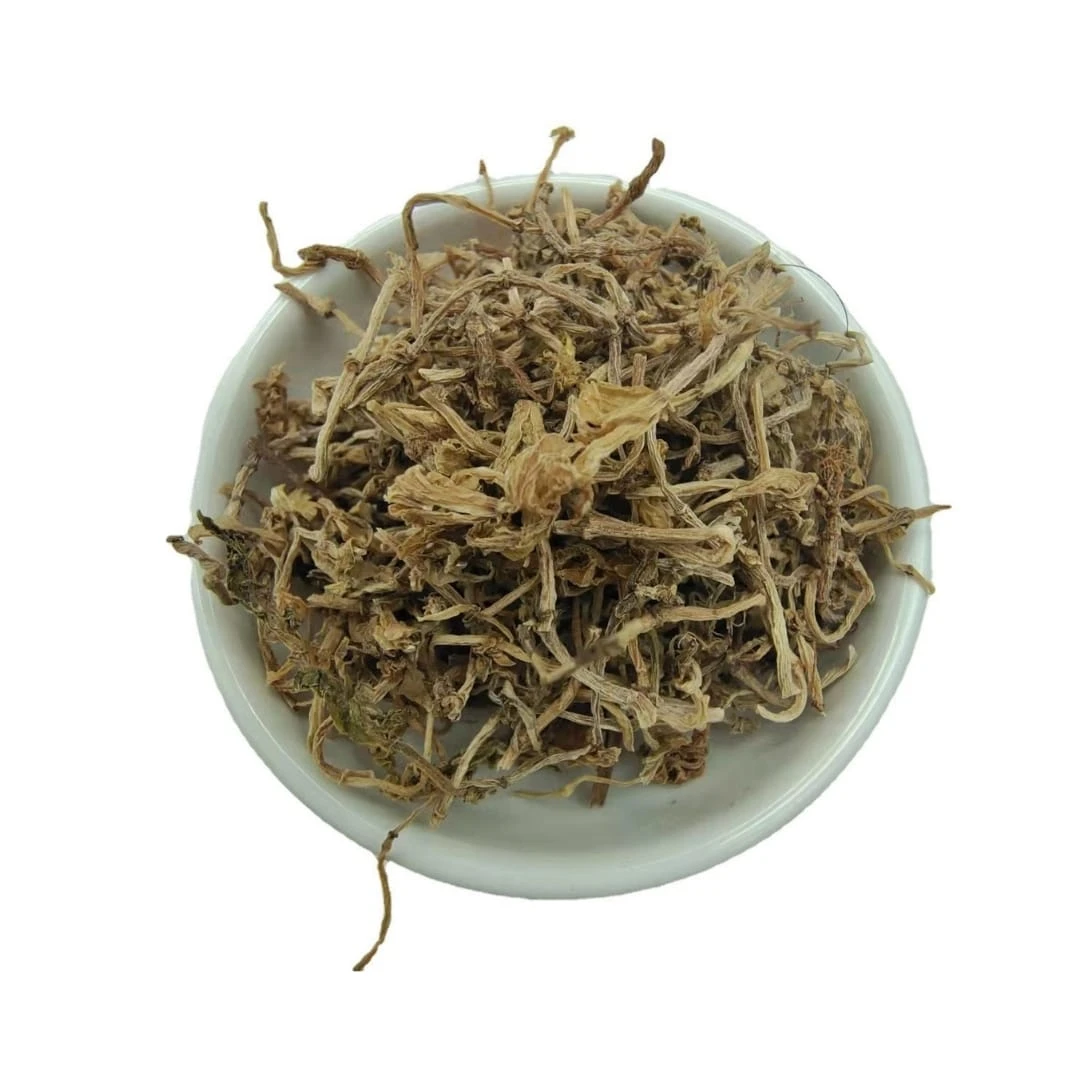
The harvesting of Sedum Sarmentosum typically occurs during the summer and autumn months, when the plant is in full bloom. The entire plant is usually collected, and then cleaned to remove any soil or debris [5]. After harvesting, the plant can be used fresh or dried for later use.
To dry Sedum Sarmentosum, the harvested plants are spread out in a thin layer in a well-ventilated area away from direct sunlight. Once dried, the herb is stored in a cool, dry place to prevent moisture absorption and maintain its medicinal properties [5]. Proper storage is crucial, to ensure the herb retains its potency over time.
Citations
[1] Li, H., et al. "Chemical composition and bioactivity of Sedum sarmentosum Bunge." Journal of Ethnopharmacology, 186, 205-214, 2016.
[2] Chen, J. K., & Chen, T. T. Chinese Medical Herbology and Pharmacology. City of Industry, CA: Art of Medicine Press, 2004.
[3] Bensky, D., Gamble, A., & Kaptchuk, T. Chinese Herbal Medicine: Materia Medica. Seattle, WA: Eastland Press, 1993.
[4] Flora of China Editorial Committee. Flora of China. St. Louis, MO: Missouri Botanical Garden Press.
[5] Yang, D., et al. "Traditional uses, phytochemistry, and pharmacology of Sedum species." Journal of Pharmacy and Pharmacology, 70(7), 847-873, 2018.
Mia Wu

Hi, I’m Mia Wu! I love helping customers discover the best natural ingredients for their products. With a passion for herbs, spices, and fungi, I work to make sure you get only the finest raw materials. Let's grow together! 🌱✨