
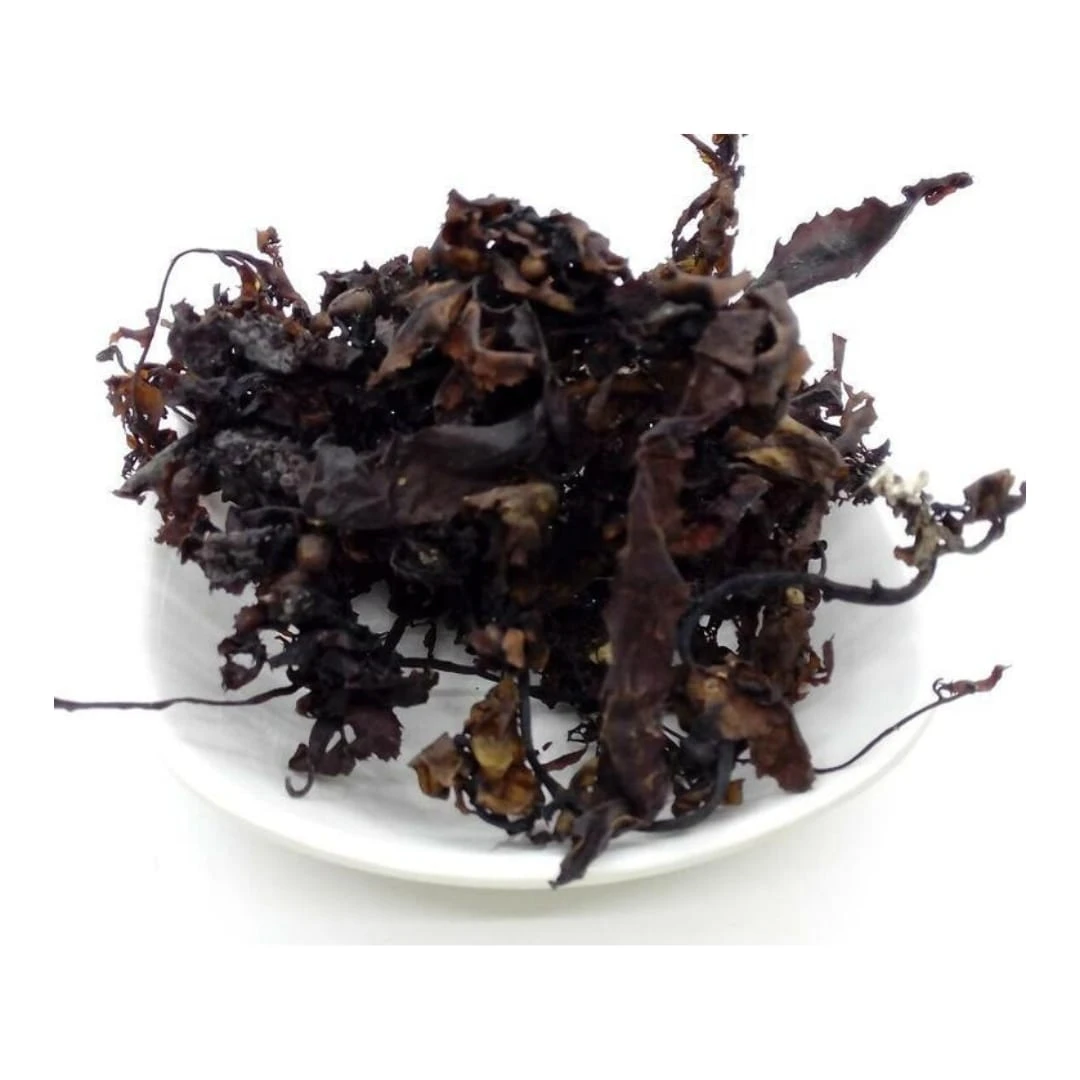


Product Introduction
Seaweed, a type of marine algae, has been utilized in traditional Chinese medicine for centuries. Its therapeutic properties are attributed to its unique composition, making it a valuable natural remedy. It is often incorporated into various herbal formulas to address specific health concerns, mostly related to stagnation and accumulation.
Main Active Ingredients
The therapeutic effects of seaweed are largely due to its active components. Iodine is essential for thyroid function, while fucoidan, a sulfated polysaccharide, exhibits antioxidant and anti-inflammatory properties. Alginic acid, another key component, is a dietary fiber that can absorb water and promote digestive health. These compounds contribute to seaweed’s ability to soften hardened masses, resolve phlegm, and promote overall well-being.
Product Application Scenarios, Usage, and Dosage
Seaweed is used in many scenarios to treat different conditions. It is often prescribed for individuals with goiter, a swelling of the thyroid gland, due to its high iodine content. Additionally, it can address edema, or fluid retention, by promoting diuresis. In TCM practice, seaweed is prepared as a decoction, where it is boiled with other herbs to extract its medicinal properties, and the resulting liquid is consumed. It’s also available in pill and powder forms for convenience. The typical dosage is 6-15 grams, but this can be adjusted by a trained practitioner based on the patient's specific condition and constitution.
Introduction to the Source Plant, Distribution, and Growth Environment
Laminaria japonica, a primary source of seaweed, is a species of kelp that thrives in cold, nutrient-rich waters. It is predominantly cultivated in coastal regions of China, Japan, and Korea. The plant attaches itself to rocky seabeds and can grow to considerable lengths, forming underwater forests. The growth environment is characterized by specific water temperatures, salinity levels, and adequate sunlight for photosynthesis. These environmental factors influence the quality and chemical composition of the seaweed.
Harvesting, Processing, and Storage
Harvesting typically occurs in the spring and summer months when the kelp has reached its optimal size and maturity. The seaweed is collected from the sea, cleaned to remove impurities, and then dried. Traditional methods involve sun-drying, while modern techniques may use mechanical dryers to expedite the process. After drying, the seaweed is sorted, processed into various forms (sheets, strips, powders), and packaged. Proper storage is crucial to maintaining its quality. It should be kept in a cool, dry, and well-ventilated place to prevent moisture absorption and degradation, ensuring that its therapeutic properties are preserved.
Citations
- Luo, P. Traditional Chinese Medicine: Seaweed. Australian Journal of Herbal Medicine, 2015, 27(4), 124-126.
- Brownlee, I. A.; Fairclough, A. C.; Hall, A. C.; Paxman, J. R. The potential health benefits of seaweed. Trends in Food Science & Technology, 2005, 16(12), 431-438.
- Teas, J.; Braverman, L. E.; Kurihara, N.; et al. Seaweed and soy: companion foods in Asian cuisine and their effects on thyroid cancer risk. American Journal of Clinical Nutrition, 2004, 80(1), 1-13.
Mia Wu

Hi, I’m Mia Wu! I love helping customers discover the best natural ingredients for their products. With a passion for herbs, spices, and fungi, I work to make sure you get only the finest raw materials. Let's grow together! 🌱✨







