
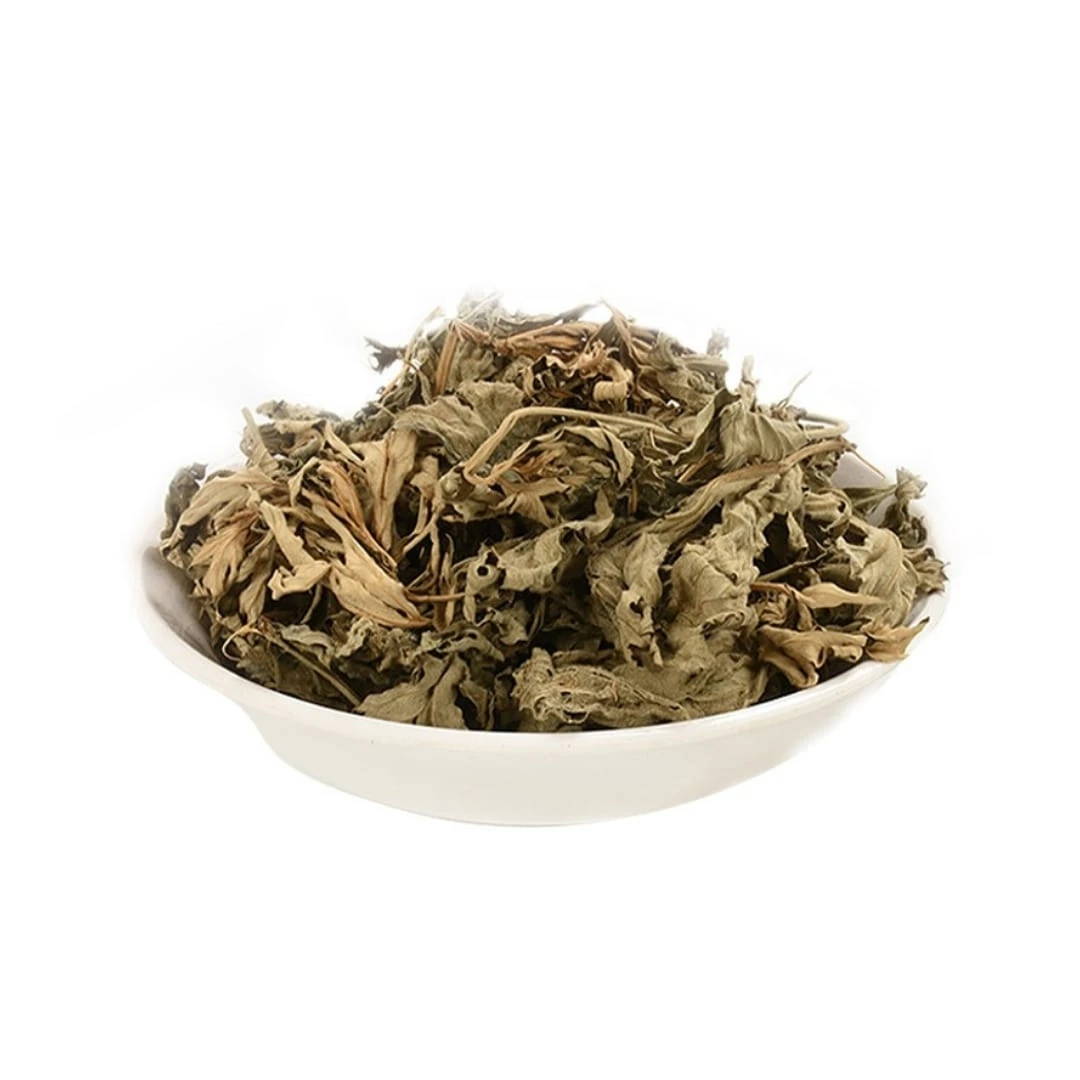


Product Introduction
Mugwort leaves, also known as Ai Ye, are derived from the Artemisia argyi plant. This herb is well-regarded in traditional Chinese medicine for its diverse therapeutic properties. Its distinctive aroma and chemical composition contribute to its wide range of applications. Mugwort is commonly used both internally and externally to address various health conditions.
Main Active Ingredients
The efficacy of mugwort leaves can be attributed to its active ingredients. Volatile oils found in the herb contain components like cineole and artemisinol, known for their antiseptic and anti-inflammatory effects [1]. Flavonoids contribute to its antioxidant properties, helping to protect cells from damage [2]. Tannins present in mugwort leaves also possess astringent qualities.
Product Application Scenarios, Usage, and Dosage
Mugwort leaves have a wide range of applications rooted in traditional practices. They are frequently used to address gynecological issues, such as menstrual irregularities and pain, commonly administered through decoctions or herbal formulas [3]. The herb is also known for its ability to stop bleeding, making it useful in cases of hemorrhage. Additionally, mugwort leaves can dispel cold and alleviate pain; they are employed in moxibustion therapy to warm the meridians.
Typical usage involves decocting 3 to 9 grams of dried mugwort leaves for oral consumption [4]. For external use in moxibustion, the leaves are processed into moxa sticks or cones. The dosage and application method should be tailored to individual conditions and under the guidance of a qualified practitioner.
Introduction to the Source Plant, Distribution, and Growth Environment
Artemisia argyi is a perennial plant belonging to the Asteraceae family. It is native to East Asia, including China, Japan, and Korea [5]. The plant thrives in a variety of environments, such as grassy slopes, roadsides, and disturbed areas. It prefers well-drained soil and full sun exposure.
Harvesting, Processing, and Storage
The leaves are typically harvested during the summer months when the plant is in full bloom [6]. After harvesting, the leaves are dried in the sun or using mechanical dryers to reduce moisture content. The dried leaves are then processed to remove stems and impurities. Properly processed mugwort leaves should be stored in a dry, cool place, away from direct sunlight, to maintain their potency and prevent spoilage.
Citations:
- Chandrashekar, K. P., Joshi, H., Prasanna, S. M., & Rao, S. B. (2012). Chemical composition and antimicrobial activity of the essential oil of Artemisia pallens Wall. Journal of Essential Oil Research, 24(4), 371-376.
- Ghasemzadeh, A., Jaafar, H. Z., Juraimi, A. S., & Rahman, M. M. (2015). Evaluation of bioactive compounds and antioxidant activity of different extracts of Gardenia brighamii. Molecules, 20(6), 10784-10799.
- Li, X., Li, Y., Chen, H., & Yang, Z. (2017). Artemisia argyi: A comprehensive review of its traditional uses, phytochemistry, pharmacology, and toxicology. Pharmaceutical Biology, 55(1), 1253-1270.
- Bensky, D., Clavey, S., & Stöger, E. (2004). Chinese Herbal Medicine: Materia Medica, 3rd ed. Seattle, WA: Eastland Press.
- Flora of China Editorial Committee. (2011). Flora of China (Vol. 20-21). Beijing: Science Press; St. Louis: Missouri Botanical Garden Press.
- Lu, T., Leach, D., Hollenbeak, C. S., & Nagaraja, T. G. (2016). Efficiency of Artemisia annua L. extracts on ruminal fermentation and methane production in vitro. Bioresource Technology, 207, 42-49.
Mia Wu

Hi, I’m Mia Wu! I love helping customers discover the best natural ingredients for their products. With a passion for herbs, spices, and fungi, I work to make sure you get only the finest raw materials. Let's grow together! 🌱✨







