


Product Introduction
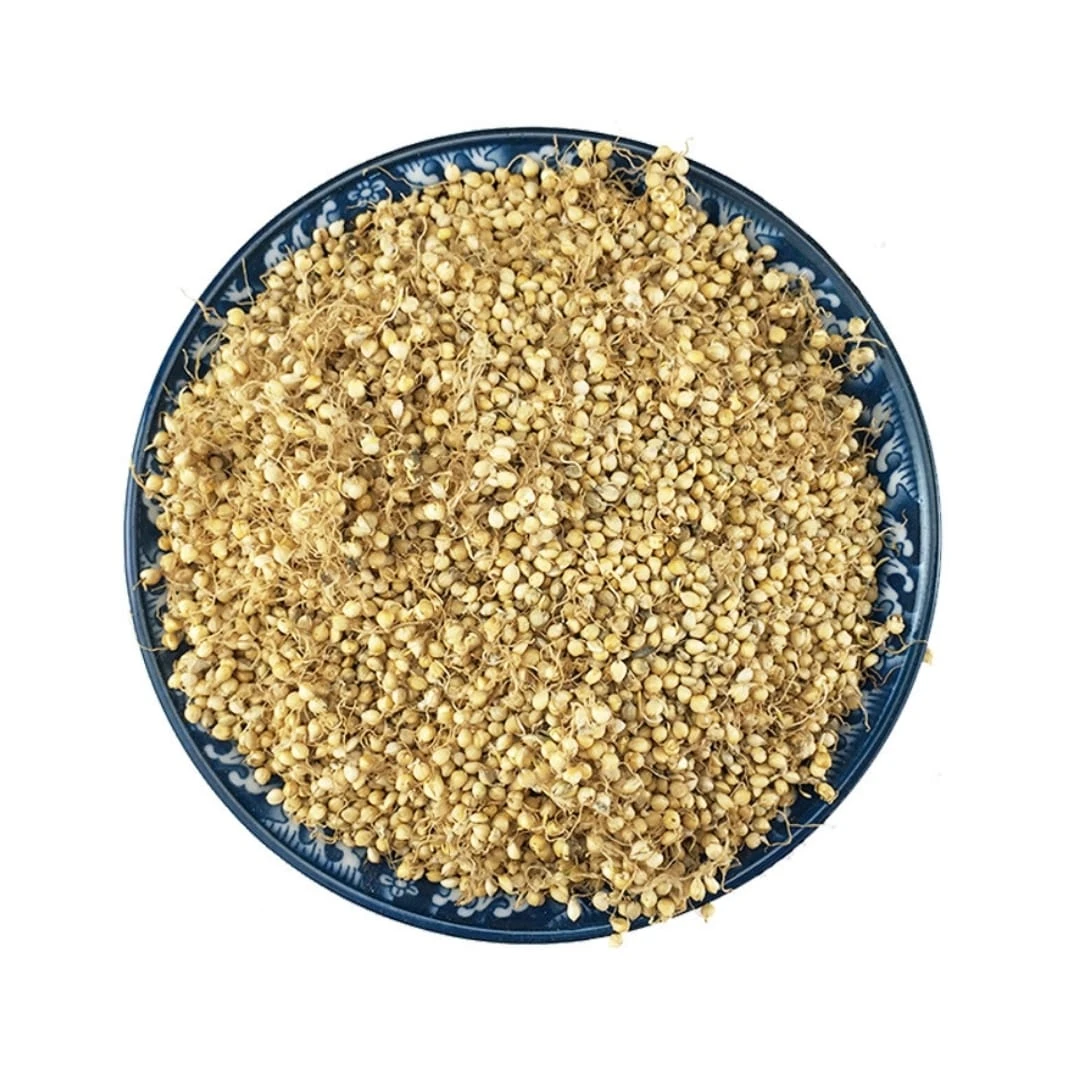
Millet sprout, also known as Su Ya in traditional Chinese medicine (TCM), is derived from germinated millet seeds. This herb is valued for its digestive benefits and its ability to support spleen function. It transforms the properties of millet grains through germination, making its characteristics distinct and beneficial for specific health applications.
Main Active Ingredients
The active ingredients in millet sprout primarily include various enzymes produced during the germination process, which aid in breaking down complex carbohydrates and proteins, therefore aiding digestion. It also contains an array of vitamins, such as B vitamins, and minerals that are essential for overall metabolic functions and contribute to its nutritional profile.
Product Application Scenarios, Usage, and Dosage
Millet sprout is mainly used to address digestive issues such as indigestion and poor appetite. It is also employed to invigorate the spleen, improving its function in nutrient absorption and overall digestive health. The typical dosage of millet sprout is between 9 to 15 grams, usually administered in decoction form—boiled with water and consumed as an herbal tea. It can also be included in herbal formulas combined with other spleen- Qi tonifying herbs to enhance efficacy.
Introduction to the Source Plant, Distribution, and Growth Environment
The source plant, Setaria italica, commonly known as foxtail millet, is a cereal grass widely cultivated in many parts of the world. It is particularly prevalent in Asia and Africa. This plant typically thrives in warm, temperate regions with well-drained soils and is cultivated for its grain, which serves as a staple food in various cultures. Millet is adaptable to various soil types, making it a resilient crop in diverse environmental conditions.
Harvesting, Processing, and Storage
Millet sprouts are harvested when the seeds have just begun to sprout. Post-harvest, they are typically dried to halt further germination and preserve their enzymatic activity. The drying process usually involves spreading the sprouts thinly and air-drying them under controlled temperatures to prevent mold growth and maintain their medicinal properties. Properly dried millet sprouts should be stored in airtight containers in a cool, dry, and dark environment to prevent degradation and preserve their potency over an extended period.
Citations
- Yeung, Him-che. Handbook of Chinese Herbs and Formulas. Institute of Chinese Medicine, 1985.
- Bensky, Dan, et al. Chinese Herbal Medicine: Materia Medica. 3rd ed., Eastland Press, 2004.
- https://powo.science.kew.org/taxon/urn:lsid:ipni.org:names:77103430-1
Mia Wu

Hi, I’m Mia Wu! I love helping customers discover the best natural ingredients for their products. With a passion for herbs, spices, and fungi, I work to make sure you get only the finest raw materials. Let's grow together! 🌱✨







