
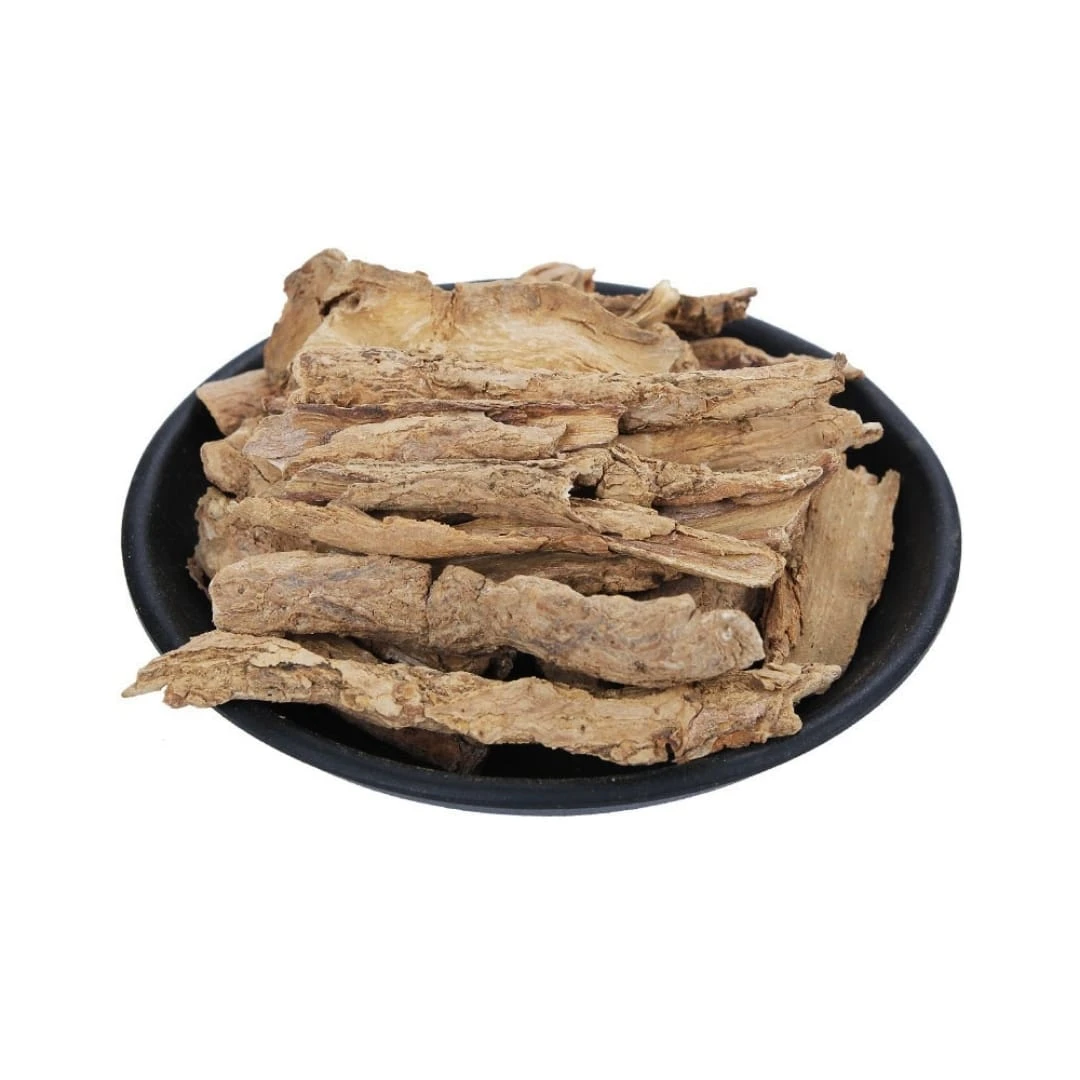


Product Introduction
Lycii Cortex, derived from the root bark of Lycium chinense or Lycium barbarum, is a widely recognized herb in traditional Chinese medicine. It is valued for its medicinal properties, particularly in addressing conditions related to deficiency-heat. The herb is carefully harvested, processed, and prepared for use in various applications. Its therapeutic benefits have been documented through traditional use and modern research, highlighting its role in promoting health and well-being.
Main Active Ingredients
The therapeutic effects of Lycii Cortex are attributed to its active chemical constituents. Betaine, a notable component, is known for its potential hepatoprotective and osmoprotective activities. Kukoamine A, another significant compound, has demonstrated hypotensive effects, contributing to cardiovascular health, and polysaccharides present immune-modulating properties, enhancing the body's natural defense mechanisms [1]. These components work synergistically to provide the diverse health benefits associated with Lycii Cortex.
Product Application Scenarios, Usage, and Dosage
Lycii Cortex is traditionally used to address various conditions, most notably those involving deficiency-heat. It is commonly prescribed for symptoms like night sweats, fever due to yin deficiency, and cough. The typical dosage ranges from 6 to 12 grams, usually administered in decoction form, and it can be used alone or in conjunction with other herbs to enhance its effects in complex herbal formulas, addressing multifaceted health issues [2].
Introduction to the Source Plant, Distribution, and Growth Environment
Lycium chinense and Lycium barbarum, the source plants of Lycii Cortex, are deciduous shrubs belonging to the Solanaceae family. Lycium chinense is native to China, Japan, Korea, and other regions of East Asia, while Lycium barbarum is primarily found in Northwestern China. These plants are adaptable and can thrive in various environments, including cultivated fields and wildlands. They prefer well-drained soils and sunny locations, contributing to their widespread distribution [3].
Harvesting, Processing, and Storage
The harvesting of Lycii Cortex involves carefully extracting the root bark from mature Lycium chinense or Lycium barbarum plants. This process typically occurs in the spring or autumn. After harvesting, the bark is cleaned, and dried, usually under the sun or using mechanical drying methods, to reduce its moisture content and prevent spoilage. Proper storage is crucial to maintain the herb's quality and efficacy. It should be kept in a cool, dry place, away from direct sunlight and moisture, to preserve its medicinal properties over an extended period [4].
Citations
[1] Zhao, R., et al. "Chemical constituents from Lycium barbarum and their bioactivities." Journal of Functional Foods 74 (2020): 104171.
[2] Bensky, D., et al. Chinese Herbal Medicine: Materia Medica. 3rd ed. Seattle, WA: Eastland Press, 2004.
[3] Flora of China Editorial Committee. "Flora of China." Missouri Botanical Garden, St. Louis, MO & Harvard University Herbaria, Cambridge, MA. (Accessed June 15, 2024).
[4] State Pharmacopoeia Commission. Pharmacopoeia of the People's Republic of China. Beijing: China Medical Science Press, 2020.
Mia Wu

Hi, I’m Mia Wu! I love helping customers discover the best natural ingredients for their products. With a passion for herbs, spices, and fungi, I work to make sure you get only the finest raw materials. Let's grow together! 🌱✨







