
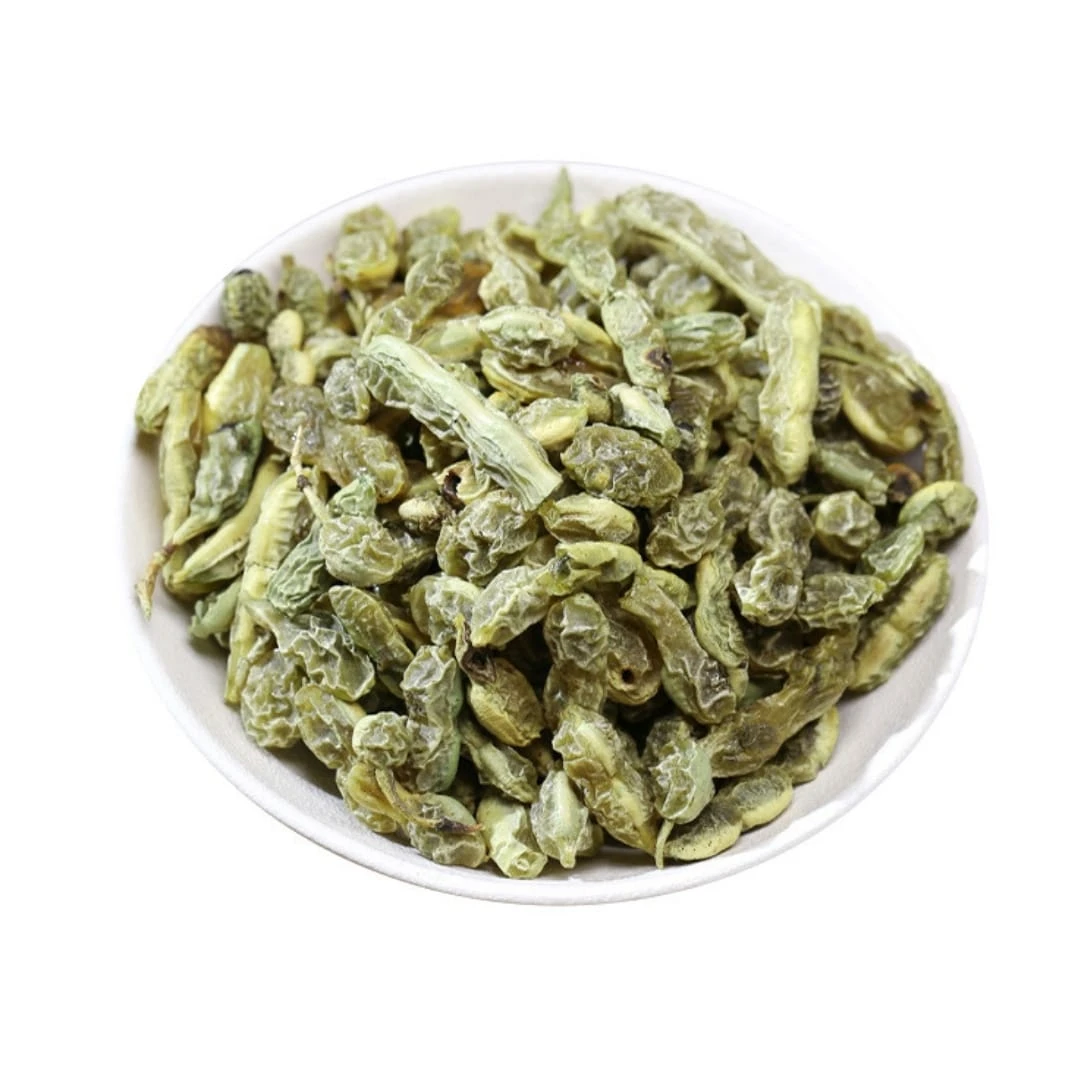


Product Introduction
Fructus Sophorae, also known as Huai Jiao, is a traditional Chinese medicine derived from the dried fruit of Sophora japonica. This herb is valued for its hemostatic properties, and it has been employed for centuries in traditional medicine to address various conditions related to bleeding, particularly those involving the lower body. The fruit develops as pods, typically greenish-yellow to brownish as they mature and dry.
Main Active Ingredients
The efficacy of Fructus Sophorae is largely attributed to its rich composition of flavonoids. Rutin is a prominent flavonoid in Fructus Sophorae, known for its potential to strengthen blood vessels and reduce capillary fragility. Quercetin, another key flavonoid, contributes to the herb's anti-inflammatory and antioxidant effects. [1] The presence of these and other bioactive compounds underpins Fructus Sophorae's therapeutic applications.
Product Application Scenarios, Usage, and Dosage
Fructus Sophorae is commonly used in traditional Chinese medicine to address conditions such as hemorrhoids, hematochezia, and uterine bleeding. It can be administered orally, often in decoctions or herbal formulas tailored to individual patient needs. The typical dosage ranges from 6 to 15 grams per day, depending on the specific condition and the practitioner's assessment. [2] Additionally, it may be used topically in some preparations for localized treatment.
Introduction to the Source Plant, Distribution, and Growth Environment
Sophora japonica, the source plant of Fructus Sophorae, is a deciduous tree native to China. It is widely cultivated in various parts of Asia, including Korea and Japan, and has been introduced to other regions around the world. The tree thrives in well-drained soils and sunny environments, often found in temperate climates. [3] It is valued not only for its medicinal fruit but also as an ornamental tree in parks and gardens.
Harvesting, Processing, and Storage
The fruits of Sophora japonica are typically harvested in the autumn when they have reached full maturity and begun to dry on the tree. After harvesting, the fruits are further dried to reduce moisture content, which helps to preserve their quality and prevent spoilage. Proper storage involves keeping the dried Fructus Sophorae in a cool, dry place, away from direct sunlight and moisture. [4] This ensures that the herb retains its potency and therapeutic properties over an extended period.
Citations:
[1] Jiang, H., et al. "Flavonoids from Sophora japonica and their bioactivities." Journal of Functional Foods 25 (2016): 95-107.
[2] Chen, J. K., & Chen, T. T. (2004). Chinese Medical Herbology and Pharmacology. City of Industry, CA: Art of Medicine Press.
[3] Li, H., et al. "Genetic diversity and population structure of Sophora japonica in China." PLoS One 9.3 (2014): e91559.
[4] State Pharmacopoeia Commission. (2020). Pharmacopoeia of the People's Republic of China (Vol. 1). China Medical Science Press.
Mia Wu

Hi, I’m Mia Wu! I love helping customers discover the best natural ingredients for their products. With a passion for herbs, spices, and fungi, I work to make sure you get only the finest raw materials. Let's grow together! 🌱✨







