
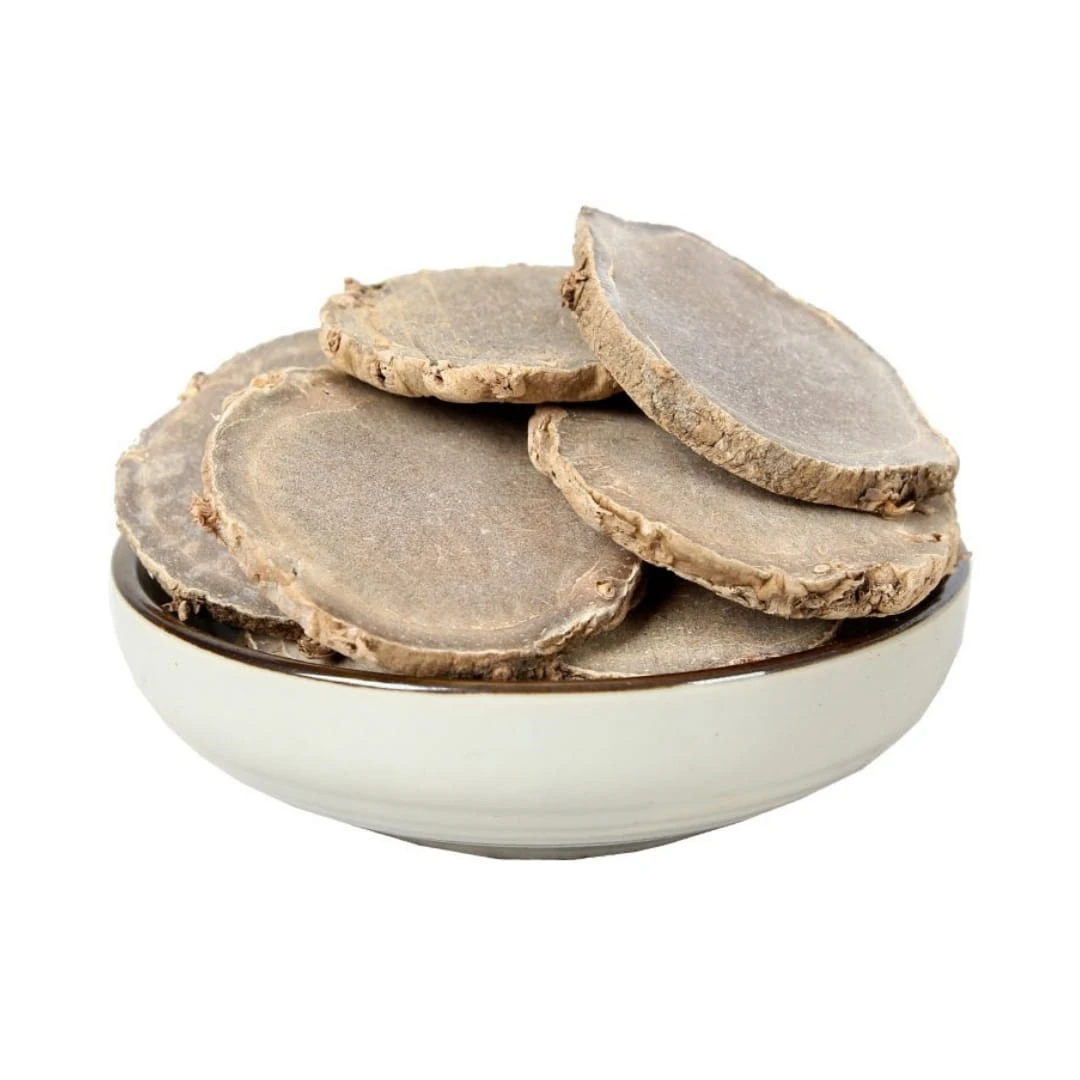


Product Introduction
Curcumae Rhizoma, a revered herb in traditional Chinese medicine, is derived from several Curcuma species. Notably, Curcuma phaeocaulis, Curcuma wenyujin, and Curcuma kwangsiensis serve as its botanical origins. The herb is characterized by its pungent and bitter taste, coupled with warm properties. It primarily influences the Liver and Spleen meridians, guiding its therapeutic applications. In traditional herbal practice, Curcumae Rhizoma is employed to invigorate Qi, break up blood stagnation, and relieve discomfort.
Main Active Ingredients
The efficacy of Curcumae Rhizoma is attributed to its complex chemical composition. Volatile oils contribute to its distinctive aroma and therapeutic effects. Curcuminoids, including curcumin, demethoxycurcumin, and bisdemethoxycurcumin, are well-known for their anti-inflammatory and antioxidant properties. [1] Polysaccharides present in Curcumae Rhizoma may also play a role in its immunomodulatory and other biological activities. [2]
Product Application Scenarios, Usage, and Dosage
Curcumae Rhizoma is traditionally indicated for conditions involving Qi stagnation and blood stasis. It may be used for abdominal masses, amenorrhea, and pain caused by blood stasis. [3] The herb can be used alone or in combination with other herbs in complex prescriptions. The typical dosage of Curcumae Rhizoma is 3 to 10 grams, taken in decoction. It can also be processed into pills, powders, or used externally. [4]
Introduction to the Source Plant, Distribution, and Growth Environment
Curcuma phaeocaulis, Curcuma wenyujin, and Curcuma kwangsiensis are perennial herbs belonging to the Zingiberaceae family. These species are native to regions in China. Curcuma phaeocaulis is mainly distributed in Zhejiang, Jiangxi, Hunan, and Sichuan provinces. Curcuma wenyujin is primarily found in Zhejiang, while Curcuma kwangsiensis grows in Guangxi. These plants thrive in warm, humid environments, often in forests or shaded areas.
Harvesting, Processing, and Storage
Harvesting of Curcumae Rhizoma typically occurs in the late autumn or early winter. The rhizomes are dug up, cleaned, and then boiled or steamed thoroughly before drying, often in the sun. [5] This process helps to preserve the herb and reduce its pungency. After drying, the herb is cut into slices or segments. Proper storage involves keeping Curcumae Rhizoma in a cool, dry place away from light and moisture to maintain its quality and potency over time. [6]
Citations:
- Li, Y., et al. "Curcuminoids inhibit multiple signaling pathways to prevent cancer development and progression." Anticancer research 37.6 (2017): 2467-2478.
- Xu, X., et al. "Structural characterization and immunomodulatory activity of a polysaccharide from Curcuma wenyujin." International journal of biological macromolecules 126 (2019): 347-354.
- Bensky, D., et al. Chinese Herbal Medicine: Materia Medica, 3rd Edition. Eastland Press, 2004.
- Chen, J.K., and T.T. Chen. Chinese Medical Herbology and Pharmacology. Art of Medicine Press, 2004.
- Tang, W., and G. Eisenbrand. Chinese Drugs of Plant Origin: Chemistry, Pharmacology, and Use in Traditional and Modern Medicine. Springer Science & Business Media, 2011.
- Liao, L., et al. "Quality assessment of Curcumae Rhizoma based on simultaneous determination of multiple components by HPLC-DAD." Journal of Pharmaceutical and Biomedical Analysis 160 (2018): 17-24.
Mia Wu

Hi, I’m Mia Wu! I love helping customers discover the best natural ingredients for their products. With a passion for herbs, spices, and fungi, I work to make sure you get only the finest raw materials. Let's grow together! 🌱✨







