
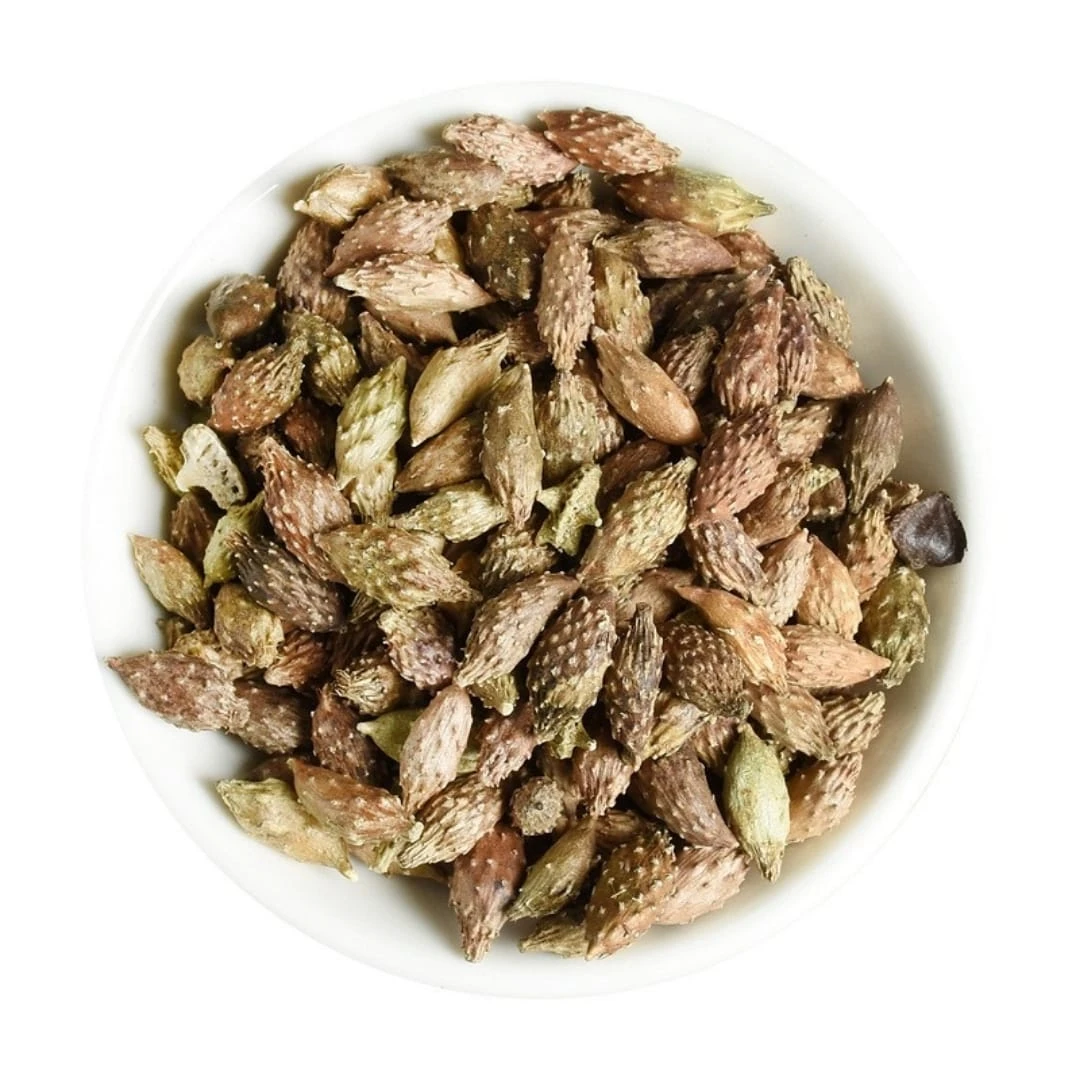


Product Introduction
Cocklebur Fruit, known in Chinese as Cang Er Zi, is a widely recognized herb in traditional Chinese medicine. It is derived from the Xanthium sibiricum plant and has been used for centuries due to its therapeutic properties. The fruit's unique composition contributes to its diverse range of applications in addressing various health conditions.
Main Active Ingredients
The efficacy of Cocklebur Fruit is attributed to its active chemical constituents. Sesquiterpenoids, including xanthinin, are among the most significant. These compounds contribute to the herb's anti-inflammatory and analgesic effects. Other components, such as volatile oils, resins, and alkaloids, may also play a role in its therapeutic actions.
Product Application Scenarios, Usage, and Dosage
Cocklebur Fruit is commonly used to alleviate nasal congestion, making it a popular remedy for rhinitis and sinusitis. Its pain-relieving properties also make it useful in managing headaches and joint pain. The typical dosage is 3-9 grams, usually administered in decoction form. It can also be found in various herbal formulas targeted at specific conditions.
Introduction to the Source Plant, Distribution, and Growth Environment
Xanthium sibiricum, the source plant, is an annual herb that grows widely in various regions around the world. It is commonly found in fields, along roadsides, and in disturbed areas. The plant is adaptable to different soil types and climatic conditions, contributing to its widespread distribution.
Harvesting, Processing, and Storage
The fruits are typically harvested in the autumn when they are fully ripe. After harvesting, the fruits are dried to reduce moisture content and prevent spoilage. They are then processed to remove any impurities before being packaged for storage. Proper storage in a cool, dry environment is essential to maintain the herb's quality and potency over time.
Citations
- Chen, J. K., & Chen, T. T. (2004). Chinese Herbal Formulas and Applications. Art of Medicine Press.
- Bensky, D., Gamble, A., & Kaptchuk, T. (1993). Chinese Herbal Medicine: Materia Medica. Eastland Press.
- Liao, J. C., et al. (2013). Anti-inflammatory and analgesic effects of Xanthium sibiricum Patrin extract. Journal of Ethnopharmacology, 150(1), 245-252.
Mia Wu

Hi, I’m Mia Wu! I love helping customers discover the best natural ingredients for their products. With a passion for herbs, spices, and fungi, I work to make sure you get only the finest raw materials. Let's grow together! 🌱✨







