

Product Introduction
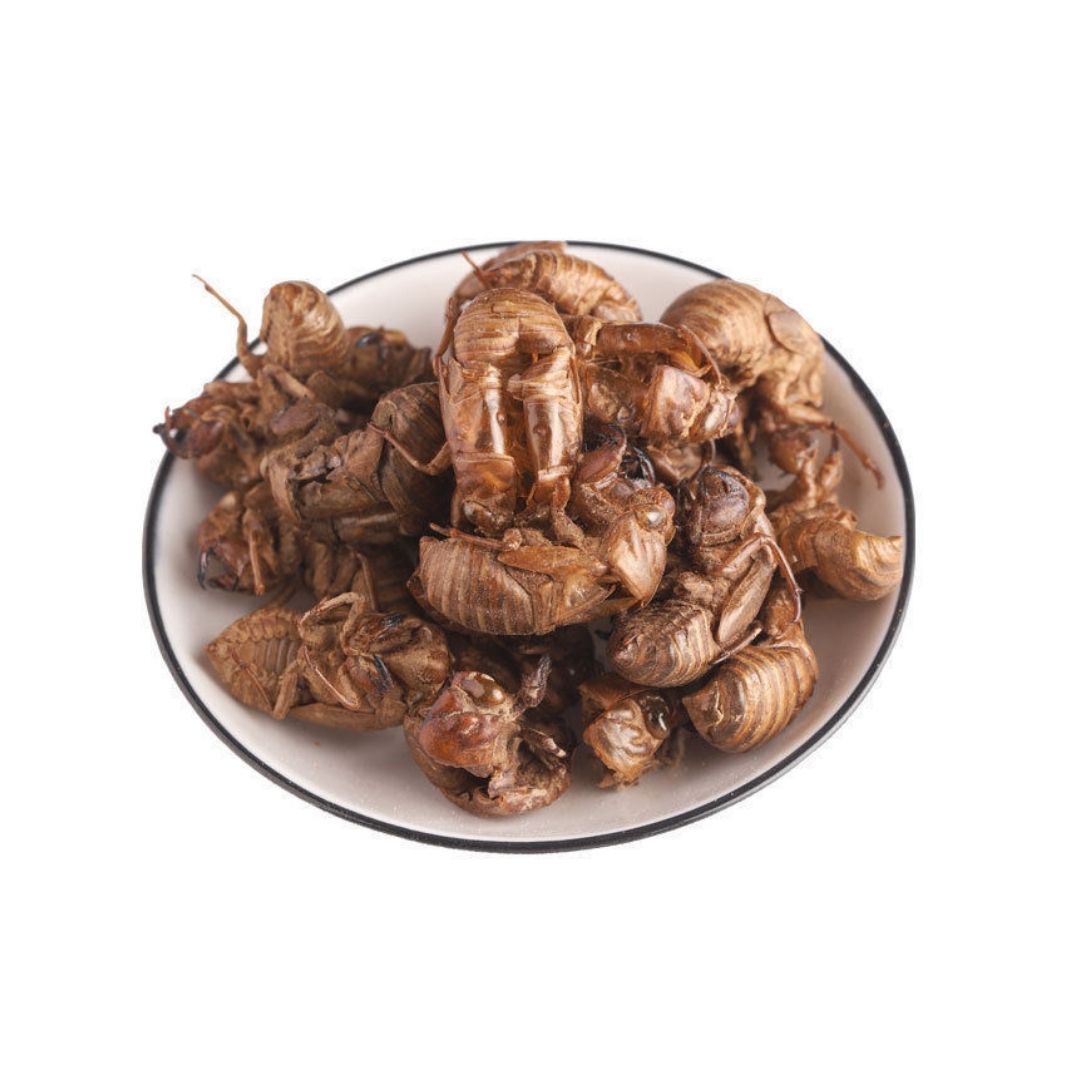
Cicada slough refers to the dried exoskeleton of cicadas during their metamorphosis. This material is valued in traditional medicine for its unique therapeutic properties. The use of cicada slough dates back centuries, with records found in various traditional medicine texts. It is collected during the summer and autumn seasons.
Main Active Ingredients
The main active ingredients in cicada slough include chitin, proteins, and various trace elements. Chitin, a primary component of the exoskeleton, is known for its biocompatibility and potential immunostimulatory effects. The protein content contributes to its nutritional profile, while trace elements may play a role in its therapeutic actions. Further research is needed to fully elucidate all active constituents and their specific functions.
Product Application Scenarios, Usage, and Dosage
Cicada slough is primarily used to address conditions related to wind, spasms, and vision. It can be applied in cases of childhood convulsions, tetanus, and skin rashes. Additionally, it is used to alleviate sore throats and eye redness. The typical dosage is 3 to 6 grams, usually administered in decoctions. It can also be ground into powder for direct consumption or used in topical applications.
Introduction to the Source Plant, Distribution, and Growth Environment
Cryptotympana pustulata, the primary source of cicada slough, is a common cicada species found in East Asia. These cicadas inhabit various environments, including forests, parks, and agricultural areas. They undergo incomplete metamorphosis, spending most of their lives as nymphs underground, feeding on plant roots. The molting process occurs when the nymphs emerge from the soil and transform into adults, leaving behind their exoskeletons.
Harvesting, Processing, and Storage
The collection of cicada slough typically occurs during the summer and autumn months when cicadas molt. The exoskeletons are gathered from trees, shrubs, and the ground. After collection, they are cleaned to remove any debris. The cleaned cicada sloughs are then dried, usually by sun-drying or using a low-heat oven. Proper drying is crucial to prevent mold growth and maintain their quality. They should be stored in airtight containers in a dry, well-ventilated place.
Citations
- National Standard of traditional Chinese medicine WS3-159(Z-159)-2002(Z). State Food and Drug Administration. 2002.
- Pharmacopoeia Commission of the People's Republic of China. (2020). Pharmacopoeia of the People's Republic of China. China Medical Science and Technology Press.
- Liao, X., et al. "Chemical composition and antioxidant activity of chitin from cicada slough." International Journal of Biological Macromolecules, vol. 126, 2019, pp. 97-104.
- Wang, J., et al. "Traditional uses, bioactivity and chemical constituents of Cryptotympana pustulata." Journal of Ethnopharmacology, vol. 258, 2020, 112873.
Mia Wu

Hi, I’m Mia Wu! I love helping customers discover the best natural ingredients for their products. With a passion for herbs, spices, and fungi, I work to make sure you get only the finest raw materials. Let's grow together! 🌱✨