
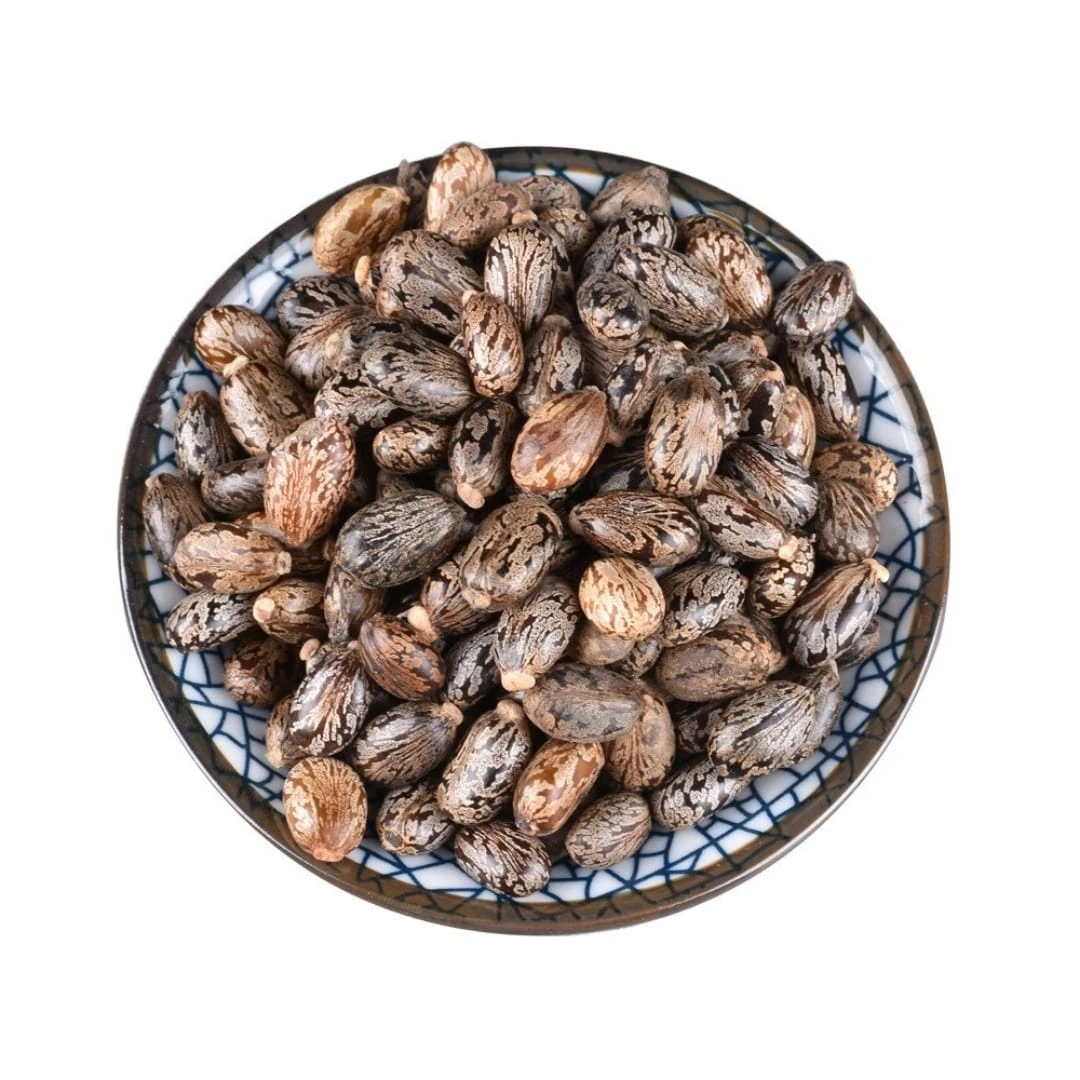


Product Introduction
Castor bean, scientifically known as Ricinus communis, is a plant species belonging to the spurge family, Euphorbiaceae. The plant is widely cultivated for its seeds, which are rich in oil. The plant is native to the southeastern Mediterranean Basin, Africa, and India, but today, it is found in tropical and temperate regions worldwide [1]. The castor bean plant is known for its rapid growth and can reach a height of up to 12 meters under optimal conditions. It features large, palmate leaves and distinctive spiky seed capsules. Despite its economic importance, it is crucial to note that the castor bean contains ricin, a highly toxic substance, making proper handling and processing essential [2]. Historically, the plant has been used in traditional medicine and various industrial applications.
Main Active Ingredients
The main active ingredient in the castor bean is ricinoleic acid, which constitutes about 90% of the fatty acid content in castor oil [3]. Castor oil, derived from the beans, also contains other fatty acids such as oleic acid, linoleic acid, and stearic acid [4]. Ricin, a toxic protein, is also present in the beans, requiring careful processing to avoid contamination. These components contribute to the bean's various effects when processed correctly and used appropriately [5]. The unique properties of ricinoleic acid make castor oil valuable in both medicinal and industrial applications. Proper extraction and purification methods are essential to harness the benefits while mitigating the risks associated with ricin.
Product Application Scenarios, Usage, and Dosage
In traditional herbal medicine, castor bean is primarily used externally [6]. Castor oil packs are applied to the abdomen to promote circulation and detoxification. The oil is also used for its anti-inflammatory and analgesic properties in treating conditions such as arthritis and joint pain [7]. For skin conditions like eczema and dermatitis, castor oil is applied topically to soothe irritation and promote healing. The dosage varies depending on the specific application. For external use, a small amount of castor oil is typically massaged onto the affected area. Ingestion is strongly discouraged due to the toxicity of the raw beans [8]. Always consult with a qualified healthcare practitioner before using castor bean products to ensure safety and proper application.
Introduction to the Source Plant, Distribution, and Growth Environment
The castor bean plant, Ricinus communis, is adaptable to various climates but thrives in warm, tropical, and subtropical regions [9]. It prefers well-drained soil and plenty of sunlight for optimal growth. The plant is widely distributed across Africa, India, and the Mediterranean Basin, with cultivation extending to the Americas and other temperate zones [10]. The plant's rapid growth and resilience make it a common sight in both agricultural and wild environments. The castor bean plant serves as an important source of castor oil, which has numerous industrial and medicinal applications. Understanding the plant's growth requirements and distribution is crucial for sustainable cultivation and utilization.
Harvesting, Processing, and Storage
Harvesting castor beans typically occurs when the seed capsules turn brown and begin to dry [11]. The capsules are collected by hand to avoid damaging the seeds. After harvesting, the seeds undergo processing to extract the oil [12]. The most common method is cold-pressing, which preserves the quality of the oil without the use of excessive heat or solvents. Proper storage is essential to maintain the oil's quality and prevent rancidity. Castor oil should be stored in a cool, dry place away from direct sunlight and heat [13]. The seeds themselves should be stored securely to prevent accidental ingestion, especially by children and pets. Following these harvesting, processing, and storage guidelines ensures the safe and effective use of castor bean products.
Citations:
[1] Duke, J. A. (1983). Handbook of energy crops. Purdue University Center for New Crops and Plant Products.
[2] Audi, J., Belson, M., Patel, M., & Schier, J. G. (2005). Ricin poisoning: A comprehensive review. JAMA, 294(18), 2342-2351.
[3] Ogunniyi, D. S. (2006). Castor oil: A vital industrial raw material. Bioresource Technology, 97(9), 1086-1091.
[4] Mutlu, H., & Meier, M. A. (2010). Castor oil as a renewable resource for the chemical industry. European Journal of Lipid Science and Technology, 112(1), 10-30.
[5] Lord, J. M., & Roberts, L. M. (2005). Ricin: Structure, mode of action, and some current applications. The FASEB Journal, 19(12), 1575-1587.
[6] McGarey, W. A. (1993). The oil that heals: A physician's successes with castor oil treatments. A.R.E. Press.
[7] Grady, H. (2001). Castor oil: The remedy that cures. Hopewell Publications.
[8] National Capital Poison Center. (n.d.). Ricin. Retrieved from https://www.poison.org/articles/ricin
[9] Weiss, E. A. (2000). Oilseed crops. Blackwell Science.
[10] Anjani, K. (2012). Castor. In Industrial crops. Springer, Boston, MA.
[11] Dailey, A. L., & Reuveni, R. (2019). Chapter 12 - Castor. In Industrial Oil Crops. Woodhead Publishing.
[12] Fazal, M. A., Haseeb, A. S. M. A., & Masjuki, H. H. (2011). Biodiesel production from castor oil (Ricinus communis L.) with novel heterogeneous catalyst. Energy, 36(2), 1497-1502.
[13] Codex Alimentarius Commission. (2019). Codex standard for named vegetable oils. CODEX STAN 210-1999.
Mia Wu

Hi, I’m Mia Wu! I love helping customers discover the best natural ingredients for their products. With a passion for herbs, spices, and fungi, I work to make sure you get only the finest raw materials. Let's grow together! 🌱✨







