
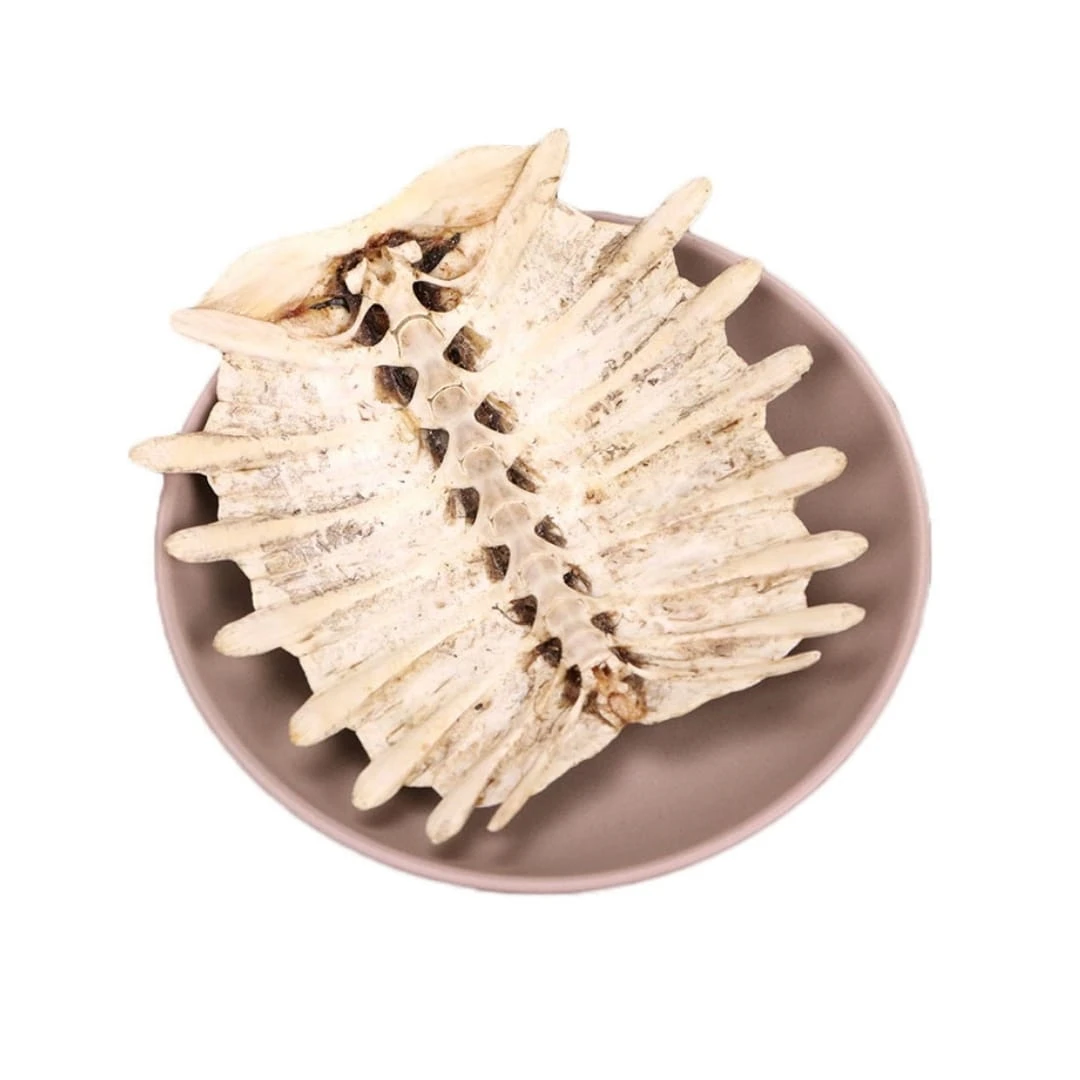


Product Introduction
Carapax Trionycis, known in traditional Chinese medicine (TCM) as Gui Ban, it is the shell of the Chinese soft-shelled turtle Trionyx sinensis. This substance has been utilized for centuries in TCM, where it is believed to possess various therapeutic properties. It is typically prepared by removing the flesh, cleaning the shell, and then drying it. The resulting product is a hard, bony plate that varies in size and shape, depending on the size and age of the turtle.
Main Active Ingredients
The primary active components of Carapax Trionycis include collagen, calcium, phosphorus, and trace minerals. Collagen is a structural protein essential for maintaining the integrity of bones, skin, and connective tissues [1]. Calcium and phosphorus are crucial for bone health and overall mineral balance in the body. The trace minerals present contribute to various physiological functions, enhancing the therapeutic effects of the shell.
Product Application Scenarios, Usage, and Dosage
Carapax Trionycis is widely used in TCM for several conditions. It is often prescribed to nourish Yin, and subdue hyperactive Yang, addressing symptoms such as night sweats, and hot flashes [2]. It is also employed to strengthen bones, and treat conditions, like osteoporosis and bone weakness. The typical dosage ranges from 9 to 30 grams, usually decocted in water and taken orally. It can also be ground into a powder, and encapsulated for easier consumption [3].
Introduction to the Source Plant, Distribution, and Growth Environment
The Chinese soft-shelled turtle, Trionyx sinensis, is native to East Asia, including China, Japan, Korea, and Vietnam. These turtles typically inhabit freshwater environments, such as rivers, lakes, and ponds, with muddy bottoms. The turtles thrive in warm climates and require access to both aquatic and terrestrial environments for basking and reproduction. Due to high demand in traditional medicine and cuisine, wild populations have faced significant pressure, leading to increased farming of these turtles [4].
Harvesting, Processing, and Storage
The harvesting of Carapax Trionycis involves collecting the shells from farmed turtles after their natural death or as a byproduct of the food industry. The shells are then meticulously cleaned to remove any residual flesh and impurities. Following cleaning, the shells are dried, typically under sunlight or in specialized drying facilities, to reduce moisture content and prevent spoilage. Proper storage is essential to maintain the quality and efficacy of the product; it should be stored in a cool, dry, and well-ventilated area to prevent mold growth and insect infestation [5].
Citations
[1] Bailey, A. J. "Molecular mechanisms of ageing in connective tissues." Gerontology 29.4 (1983): 308-316.
[2] Chen, J. K., & Chen, T. T. "Chinese Medical Herbology and Pharmacology." Art of Medicine Press, 2004.
[3] Bensky, D., Gamble, A., & Kaptchuk, T. J. "Chinese Herbal Medicine: Materia Medica." Eastland Press, 1993.
[4] IUCN. "Trionyx sinensis." The IUCN Red List of Threatened Species 2016: e.T22023A97428488.
[5] State Pharmacopoeia Commission of the People’s Republic of China. "Pharmacopoeia of the People’s Republic of China." China Medical Science Press, 2020.
Mia Wu

Hi, I’m Mia Wu! I love helping customers discover the best natural ingredients for their products. With a passion for herbs, spices, and fungi, I work to make sure you get only the finest raw materials. Let's grow together! 🌱✨







