
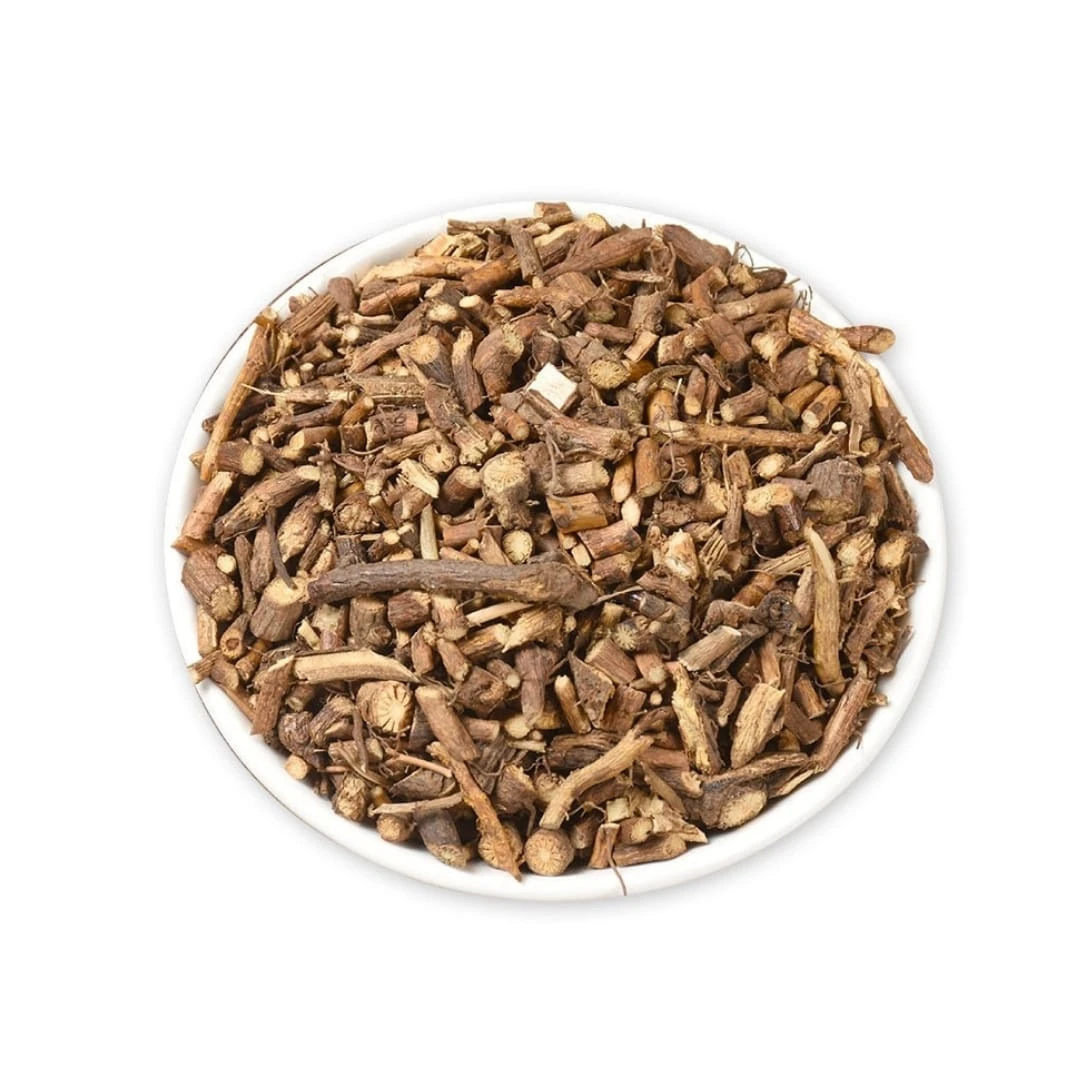


Product Introduction
Beanroot, known also as Kudzuvine Root, is the dried root of Pueraria lobata (Willd.) Ohwi, Pueraria thomsonii Benth, or Pueraria montana var. thomsonii [1]. The herb is valued in traditional medicine for its therapeutic properties. Typically, it is harvested, processed and then dried for use in various preparations.
Main Active Ingredients
The main active ingredients of Beanroot are isoflavones, such as puerarin, daidzin and daidzein [2]. These compounds contribute to the herb's pharmacological effects. These constituents have significant antioxidant properties.
Product Application Scenarios, Usage, and Dosage
In traditional practice, Beanroot has been used for several purposes. It is used to alleviate thirst caused by heat. It acts to vent measles. It is also used to relieve exterior syndromes. The typical dosage of Beanroot is 10 to 15 grams, generally administered in decoction form [3].
Introduction to the Source Plant, Distribution, and Growth Environment
The source plants for Beanroot are Pueraria lobata (Willd.) Ohwi, Pueraria thomsonii Benth, and Pueraria montana var. thomsonii. These plants are distributed across various regions. The plants typically thrive in sunny environments with well-drained soils.
Harvesting, Processing, and Storage
Beanroot is typically harvested in autumn and winter. The roots are dug up, cleaned, and cut into segments [4]. These segments are then dried, either in the sun or using mechanical drying methods, to reduce moisture content and prevent spoilage. Once dried, Beanroot should be stored in a cool, dry, and well-ventilated place to maintain its quality and potency. It should be protected from moisture, and pests.
Citations:
[1] National Pharmacopoeia Committee. (2020). Pharmacopoeia of the People's Republic of China. China Medical Science and Technology Press.
[2] Zhang, Y., et al. (2019). Chemical constituents and bioactivities of Pueraria lobata: A review. Journal of Ethnopharmacology, 237, 415-441.
[3] Bensky, D., et al. (2015). Chinese Herbal Medicine: Materia Medica. 3rd ed. Eastland Press.
[4] Chen, J. K., & Chen, T. T. (2004). Chinese Medical Herbology and Pharmacology. Art of Medicine Press.
Mia Wu

Hi, I’m Mia Wu! I love helping customers discover the best natural ingredients for their products. With a passion for herbs, spices, and fungi, I work to make sure you get only the finest raw materials. Let's grow together! 🌱✨







